
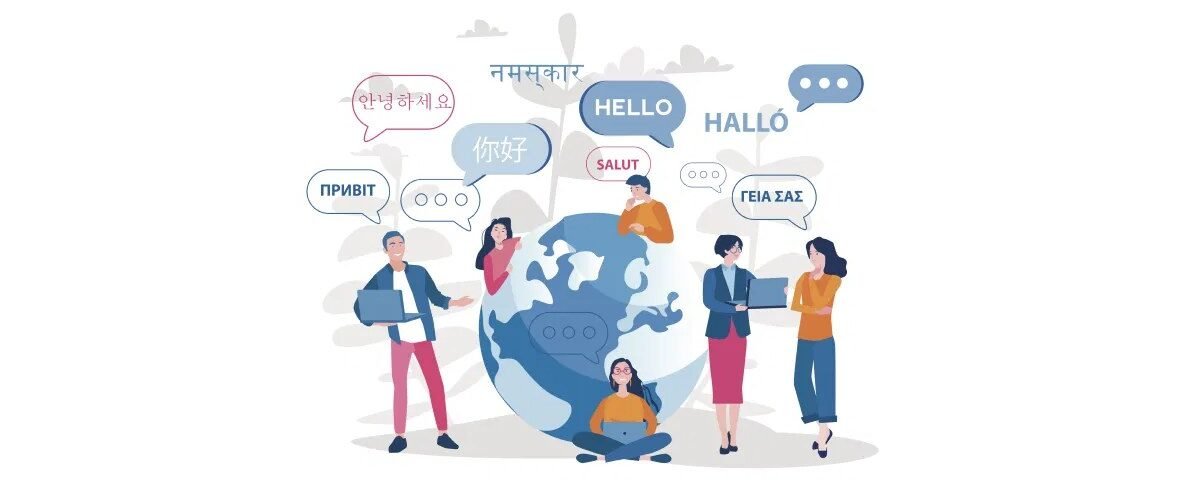
Here’s a test most chatbot comparisons skip: talk to the AI in three different languages in one conversation, throw in some slang, maybe mix two languages in one sentence. Which AI chatbot is best for multilingual conversations? As someone who works across languages, I’ve found the differences enormous — some chatbots are genuinely polyglot, others are English speakers wearing a translation costume. Here’s the 2026 breakdown.
What “Good at Languages” Actually Means
Three distinct skills, and chatbots vary independently on each:
- Fluency breadth — how many languages it handles well (not just “supports”)
- Translation quality — nuance, idiom, register (formal vs casual)
- Code-switching — handling mixed-language conversation naturally, the way bilingual people actually talk
The Ranking
1. ChatGPT — Best Overall Multilingual
ChatGPT handles 50+ languages well, not just the big European ones. What sets it apart: nuance. It gets idioms, adjusts formality levels (crucial in languages like Japanese, Korean, and Spanish with formal/informal registers), and handles code-switching gracefully — I’ve had conversations mixing English, Spanish, and Spanglish without it missing a beat. Voice mode in other languages is also excellent, which matters for language learning.
2. Gemini — Best for Low-Resource Languages
Google’s language data advantage shows. For languages beyond the top 20 — think Swahili, Bengali, Tamil — Gemini is often noticeably better, thanks to Google’s decades of Translate data. If your language isn’t well-served by most AI, try Gemini first. It’s available in 80+ languages with solid quality across more of them than competitors.
3. Claude — Best for Nuanced Writing in Major Languages
Claude writes beautifully in English, French, Spanish, German, and other major languages — its prose quality transfers across languages better than most. But its language breadth is narrower; venture beyond the top 15-20 languages and quality drops faster than with ChatGPT or Gemini.
Practical Multilingual Use Cases
- Learning a language: ChatGPT’s voice mode is the killer app — real conversation with corrections. Tell it your level and let it adjust. Way better than flashcards for speaking confidence.
- Professional translation: all three handle business translation, but always have a native speaker review anything public-facing. AI misses cultural nuance.
- Travel: Gemini’s camera + translation combo (point at a menu, get instant translation) is unbeatable on the road.
- Multilingual customer support: for business use, test your specific language pair — quality varies enormously by pair, not just by language.
For language learning specifically, our ChatGPT for learning English guide has techniques that transfer to any language.
The Code-Switching Test
This is my favorite differentiator. Real bilingual people don’t stay in one language — they mix. I tested: “Oye, can you help me escribir un email to my jefe? It’s about the proyecto deadline.”
ChatGPT handled it perfectly — responding in matching Spanglish, understanding both parts. Gemini was good. Claude was… confused, responding entirely in English and missing the Spanish nuance. If you live between languages, this matters daily.
What About Local Models for Other Languages?
Worth knowing: some open models are specifically strong in certain languages (various Chinese, Arabic, and Indic-language models). If you need deep capability in one non-English language, a specialized local model can outperform the big multilingual ones. Our best local model for multilingual chat covers this niche.
Which AI Chatbot Is Best for Multilingual Conversations Beyond English?
Fluency isn’t binary — it’s a spectrum. The major models are genuinely fluent in perhaps 20-30 languages, competent in another 50, and shaky beyond that. “Competent” means fine for everyday chat, risky for legal, medical, or technical content. Know which tier your language falls in before trusting output.
Translation direction matters too: English → target language is usually stronger than the reverse, because training data skews English-heavy. If you’re working out of a smaller language, verify more carefully.
For serious multilingual work, the workflow is: AI for the first draft, native speaker for review. The AI handles the mechanical 90%; the human catches the cultural 10%. That division of labor is the honest answer in 2026. Google’s Gemini, built on Google’s vast multilingual data, is especially worth testing for non-English tasks.
Low-resource languages are the honest frontier: quality drops sharply outside the well-represented few dozen. If you work in a less-common language, test rigorously with native speakers before trusting output for anything public. Machine translation plus human review remains the responsible pipeline — and contributing corrections where platforms allow helps the next speaker.
One more practical note: save your best multilingual prompts as templates. The phrasing that produces good Vietnamese translations or clear French explanations is worth keeping — you will reuse it. A small personal library of proven prompts beats re-deriving the wording every time.
The Bottom Line
Which AI chatbot is best for multilingual conversations? ChatGPT for overall polyglot ability and code-switching, Gemini for less-common languages, Claude for beautiful writing in major languages. Test your specific language — “supports 50 languages” means very different things for Spanish versus Sinhala. And if you’re still choosing your primary AI, our which AI is best to use decision guide factors this in.



