
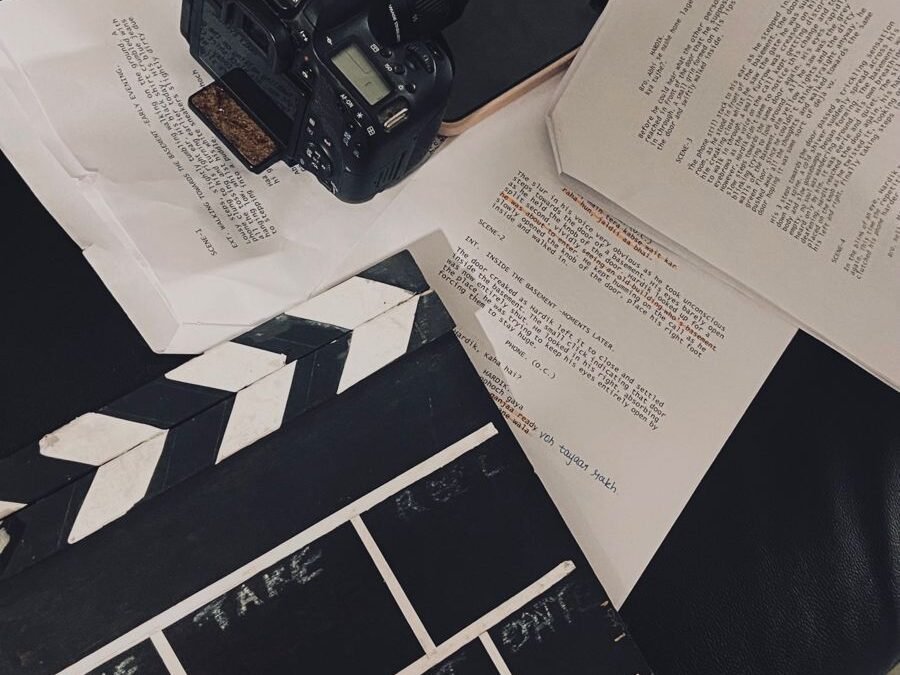
Can AI help write a screenplay? I was skeptical — screenwriting is about subtext, rhythm, and visual storytelling, the most human of crafts. But after testing AI on dialogue, structure, and formatting, I’ve changed my mind: what is the best AI for screenwriting and scripts in 2026? AI won’t write your masterpiece, but it’s a shockingly good writing partner for the craft’s mechanical parts. Here’s what works and what doesn’t.
What AI Is Good at in Screenwriting
- Structure and outlining. Beat sheets, three-act structure, sequence breakdowns — AI knows the frameworks cold and applies them sensibly.
- Dialogue drafts. First-pass dialogue that’s… fine. Usable as a starting point, rarely as final.
- Brainstorming. “Give me 10 ways this scene could go wrong for the protagonist” — infinite idea generation.
- Formatting. Proper screenplay format (sluglines, action lines, parentheticals) — AI handles this reliably.
- Coverage and feedback. “Read my 20-page short and tell me where the pacing drags” — genuinely useful notes.
What AI Can’t Do in Screenwriting
- Original voice. AI dialogue is competent and soulless. The lines that make scripts memorable — the weird, specific, human lines — don’t come from statistical averages.
- Subtext. Characters saying one thing and meaning another, the heart of drama, is beyond current AI.
- Vision. Why this story, why now, what it means — AI can’t supply the reason your script should exist.
- Taste. Knowing which of 10 decent options is the right one. That’s judgment, and it’s yours.
The Best AI Tools for Screenwriting
1. Claude — Best for Dialogue and Character Voice
Claude’s ear for voice makes it the best at the human parts of screenwriting. Give it character descriptions and it maintains distinct voices across scenes better than competitors. Its feedback on drafts is also the most insightful — specific, craft-aware, honest about weaknesses.
2. ChatGPT — Best for Structure and Outlining
For beat sheets, act breaks, and structural analysis (“does my Act 2 have enough escalation?”), ChatGPT is excellent. It knows every screenwriting framework ever published and applies them practically rather than dogmatically.
3. Screenwriting-Specific AI Tools — Best for Integrated Workflow
A few tools now combine screenwriting software with AI assistance — brainstorming within your script, AI coverage, formatting help. If you write scripts regularly, the integrated workflow beats copy-pasting between a chatbot and Final Draft.
A Practical Screenwriting Workflow With AI
- You: the idea, the theme, the characters, why this story matters. (Non-negotiable — this is the art.)
- AI: help structure it — beat sheet, act breaks, sequence outline.
- You: write the scenes. The actual writing is yours.
- AI: feedback pass — pacing, structure, dialogue polish suggestions.
- You: rewrite. The rewrite is where scripts are made, and it’s human work.
Notice the pattern: AI handles scaffolding and feedback; you handle creation and judgment. For related forms: AI for scripts generally, script tools for creators, AI story generators.
What Is the Best AI for Screenwriting and Scripts: Dialogue Tips
AI dialogue tends toward the same flaw: everyone sounds like the same articulate assistant. Real screen dialogue has voice — characters who interrupt, deflect, speak in fragments, avoid saying what they mean. To get there, prompt for subtext explicitly: “Write this scene where neither character says what they actually want.”
Character voice technique: write a voice sheet for each major character (vocabulary, rhythm, what they never say), then include it in scene prompts. “Write this argument in Maria’s voice: short sentences, dry humor, never apologizes.” The constraint forces differentiation.
Use AI for what it’s good at in screenwriting: structure, brainstorming, breaking story blocks, formatting. Keep the dialogue passes for yourself — or at least do a final human pass on every line. Audiences forgive plot holes faster than they forgive dialogue that sounds like a chatbot. Claude’s dialogue capabilities are a strong starting point for script work.
Formatting is non-negotiable in screenwriting: proper screenplay format signals professionalism instantly. AI can draft in correct format if instructed, but always verify against standard conventions before submitting anywhere. Readers forgive story imperfections far sooner than format sloppiness — format is the first impression.
Read dialogue aloud with a partner when possible — one voice per character. Awkward lines reveal themselves instantly in performance in a way silent reading hides. This single practice improves AI-assisted dialogue more than any prompting trick.
Keep a dialogue journal: lines you love from films and shows, analyzed for why they work. Your ear improves with deliberate study, and AI-assisted dialogue gets better as your taste sharpens.
The Bottom Line
What is the best AI for screenwriting and scripts? Claude for dialogue, character voice, and feedback; ChatGPT for structure and outlining. But the deeper truth: AI is a craft assistant, not a creator. It can scaffold your structure, draft your dialogue, and critique your pacing — but the voice, the vision, and the taste are yours. The writers thriving with AI aren’t the ones generating scripts; they’re the ones using AI to write better scripts, faster.



