
Everyone’s building AI agents. Few are building them well — because the framework you choose shapes everything: how your agent reasons, what tools it can use, how it handles failure, and whether your project survives contact with production. What is the best framework for building AI agents in 2026? I’ve built agents with all the major frameworks, from quick prototypes to production systems. Here’s the honest comparison.
What AI Agent Frameworks Do
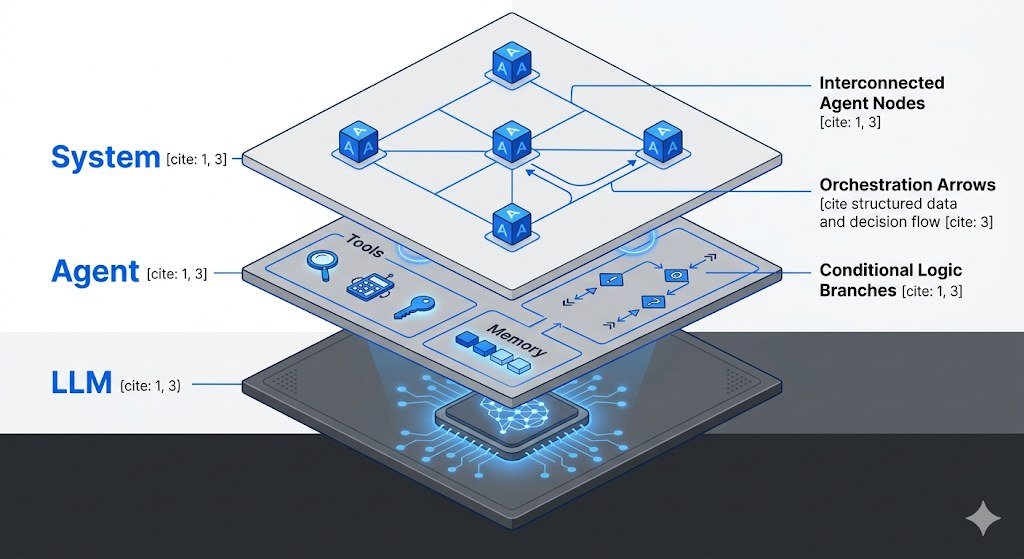
Quick context: an “agent” is AI that doesn’t just answer — it acts: using tools, making decisions, completing multi-step tasks. Frameworks provide the scaffolding: tool calling, memory, planning loops, error handling, observability. You can build agents with raw API calls, but frameworks save you from reinventing the orchestration wheel.
For the conceptual background: agentic AI vs generative AI.
The Major Frameworks Compared
1. LangChain / LangGraph — Best Ecosystem
The 800-pound gorilla. LangChain pioneered the space and LangGraph (its successor for agents) is the most capable general framework: flexible agent architectures, strong tooling, massive community, integrations with everything. The criticism — complexity, abstraction heaviness — is fair but overstated for serious projects. If you’re building production agents and want the biggest ecosystem, start here.
2. CrewAI — Best for Multi-Agent Teams
CrewAI’s mental model — agents with roles working together like a team — clicks intuitively. “Researcher agent finds data, analyst agent analyzes, writer agent writes.” Great for prototype-to-demo speed and for workflows that naturally decompose into roles. Less flexible than LangGraph for exotic architectures, but faster to productive.
3. AutoGen (Microsoft) — Best for Conversational Agents
Microsoft’s framework excels at agents that collaborate through conversation — including human-in-the-loop patterns where the agent checks with you at key points. Strong for enterprise scenarios where oversight matters. Backed by Microsoft’s ecosystem.
4. OpenAI Agents SDK — Best for OpenAI-Native
If you’re all-in on OpenAI’s models and APIs, their native SDK is the path of least resistance — tight integration, sensible defaults, less abstraction to learn. The tradeoff is ecosystem lock-in.
5. Raw API + Custom Orchestration — Best for Full Control
For simple agents, you might not need a framework. A loop: prompt → model decides → execute tool → feed result back → repeat. Fifty lines of code. Frameworks earn their keep at complexity; don’t adopt one for a problem a loop solves.
How to Choose
- Prototype / hackathon: CrewAI or OpenAI Agents SDK — fastest to working demo.
- Production system: LangGraph — most control, best observability, biggest community for troubleshooting.
- Enterprise with oversight needs: AutoGen — human-in-the-loop patterns built in.
- Simple task automation: raw API loop — skip the framework entirely.
- Learning: build one agent raw first (understand the loop), then pick a framework. You’ll choose better knowing what’s underneath.
What the Frameworks Don’t Solve
- Evaluation. How do you know your agent works? Testing agents is genuinely hard — non-deterministic, multi-step, tool-dependent. Budget real time for this.
- Reliability. Agents fail in creative ways: infinite loops, tool misuse, confident wrong actions. Guardrails and human oversight aren’t optional.
- Cost. Agentic loops burn tokens fast. A chat costs cents; an agent run can cost dollars. Monitor from day one.
- Security. Agents with tool access are a new attack surface — prompt injection, data exfiltration. Treat agent permissions like user permissions: least privilege.
Beyond Frameworks: The No-Code Agent Builders
Not a developer? Platforms like Relevance AI, Lindy, and others let you build agents visually. Less flexible, much faster. For business automation (the automation agency world), these are often the right choice. And Anthropic’s Claude Cowork brings agentic capabilities to non-technical users directly.
What Is the Best Framework for Building AI Agents Without Coding?
No-code agent builders changed who can build agents: operations managers, marketers, founders — people with workflow knowledge but no engineering background. The tradeoff: less flexibility, platform dependence, and costs that scale with usage.
Evaluate no-code options on: the complexity ceiling (can it handle your workflow, not the demo?), integration depth with your actual tools, error handling (what happens when a step fails?), and exit costs (can you export your work if you outgrow it?).
Start with your simplest high-value workflow, prove the ROI, then expand. The organizations succeeding with no-code agents share a pattern: they automate one painful process completely before touching the next. Anthropic’s agent documentation covers the underlying concepts these platforms implement.
The Bottom Line
What is the best framework for building AI agents? LangGraph for production power and ecosystem, CrewAI for multi-agent prototyping speed, AutoGen for enterprise oversight patterns, raw APIs for simple cases. But the framework is maybe 30% of agent success — the other 70% is evaluation, guardrails, cost control, and deeply understanding the task you’re automating. Choose the simplest tool that fits, invest in testing, and respect the failure modes. Agents are powerful precisely because they’re autonomous; that autonomy demands engineering discipline.



