Remote job hunting in 2026 is a paradox: more companies hire remotely than ever, yet competition for each role is fiercer because the applicant pool is global. You’re not competing with your city anymore — you’re competing with the planet. The best AI tools for remote job seekers don’t just make applying faster; they help you compete smarter in that global arena. The question we answer here: what are the best AI tools for remote job seekers.
What are the best AI tools for remote job seekers?
The remote job search is a different game
Before the tools, understand the game. Remote work hiring has quirks that office hiring doesn’t:
- Async communication is the job. Remote employers screen for written clarity above almost everything. Your application is the writing sample.
- Trust signals matter more. Without hallway osmosis, employers look for evidence of self-direction: shipped projects, public work, clear documentation habits.
- Time zones are a filter. Many “remote” roles quietly require overlap with specific hours. Knowing your target overlap zones focuses the search enormously.
- Scams proliferate. Fake remote job postings harvesting data or running “equipment purchase” scams are rampant. Verify every employer independently.
The AI toolkit, stage by stage
Finding the right roles
AI-powered job matching has improved beyond keyword soup — good tools now understand that your “built internal dashboards at a fintech” maps to a “data analyst, remote, fintech” posting even when the titles differ. Set up alerts with specific criteria (role, salary floor, timezone overlap, company size) and let the matching run daily. But don’t rely on one source: combine AI-matched boards with remote-specific job sites and direct company career pages. The best remote roles often never hit the big aggregators.
Tailoring applications at scale
This is where AI earns its keep. The winning strategy for remote applications is high customization per application — and that’s only feasible with AI assistance. For each serious application: analyze the posting for key requirements and language, tailor your resume bullets (AI resume builders built for this), and draft a cover letter that references something specific about the company. Ten tailored applications beat a hundred generic ones, and the data on this isn’t close.
Preparing for remote-specific interviews
Remote interviews test different things: your home office setup, your async communication, your comfort with the tools. AI interview practice tools can drill you on the remote-specific questions — “how do you stay productive working from home?”, “tell me about a time you resolved a conflict asynchronously” — which trip up otherwise strong candidates. Also: test your tech. Nothing kills momentum like a candidate fumbling screen-share.
Evaluating the offer
AI can help you sanity-check remote offers: salary benchmarking against location-adjusted data, red-flag detection in contracts (non-competes, IP assignment scope, termination terms), and benefits comparison. It’s not legal advice, but it’s a strong first filter before you pay a lawyer for the final review.
Standing out in a global pool
Here’s the uncomfortable truth about AI-assisted applications: everyone has the same tools now, so “used AI to write a good cover letter” is table stakes, not differentiation. What actually differentiates remote candidates in 2026:
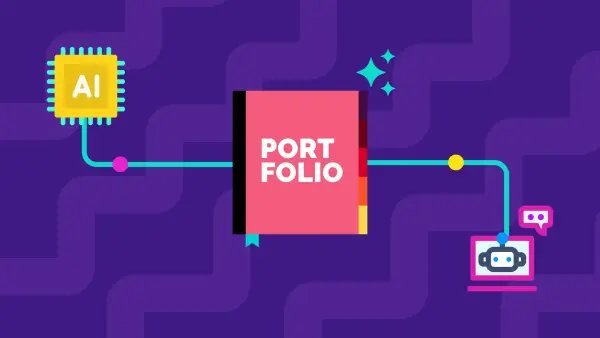
- Proof of work. A portfolio, a GitHub, writing samples, a Loom walkthrough of a project — anything that shows rather than tells. AI can help you package it; only you can create it.
- Specificity about the company. Reference their product, their blog, their challenges. Generic flattery is detectable; specific observation isn’t.
- Async communication excellence. Clear, structured, complete messages. Every email is an audition for how you’ll communicate on the job.
- Overlap honesty. Be upfront about your working hours and timezone. Hiding it wastes everyone’s time.
Keep perspective on the market
Build your application asset kit
Before applying anywhere, assemble these once — then every application is assembly, not creation: 1. The master resume (everything, 3-4 pages — you tailor down per application, never up). 2. Three cover letter templates (career changer, perfect fit, stretch role) with blanks for company-specifics. 3. The portfolio link (one URL with your best 3-5 work samples — not twelve; curation signals judgment). 4. Your “about me” paragraph (150 words, in your voice — reused across profiles and intros). 5. Reference list (3 people who’ve agreed — ask before you need them). 6. The salary research doc (bands for your role by market — updated quarterly). Build the kit once with AI assistance, maintain it lightly, and each application becomes a 30-minute tailoring exercise instead of a from-scratch ordeal. The job seekers who treat applications as a system outperform the ones treating each as a craft project — volume of tailored applications is the metric that correlates with offers.
Remote work isn’t the free-for-all of 2021 anymore, but it’s not dead either — it’s maturing into a stable, competitive segment. Remote AI jobs in 2026 covers the hottest subsegment if your skills lean technical. The through-line: remote job seeking rewards the prepared and the specific. Use AI to multiply your preparation and sharpen your specificity — not to blast more generic applications into the void. OpenAI‘s models power most of these job-search tools under the hood, so the differentiator is always the workflow: which tool, used how, for which stage. Build your pipeline deliberately and the global competition starts looking a lot less intimidating.