“Learn AI” is the vaguest career advice of the decade. What does it even mean — train neural networks? Write better prompts? Manage AI products? The skills you need for AI jobs in 2026 depend enormously on which AI job you want, and most advice collapses that distinction into useless mush. Let’s fix that. The question we answer here: what skills do you need for AI jobs in 2026.
I’ll break this into three tracks — builder, applier, and leader — because “AI job” means completely different things in each, and the skill lists barely overlap.
What skills do you need for AI jobs in 2026?
Track 1: AI builders (engineers & researchers)
These are the people creating AI systems. The AI engineer salary premium lives here, and so do the steepest requirements:
- Strong programming fundamentals: Python is the lingua franca; you also need to be comfortable reading papers and translating math into code. No shortcuts here.
- Machine learning foundations: How models actually learn — training, overfitting, evaluation metrics, the bias-variance tradeoff. You can’t debug what you don’t understand.
- LLM-specific skills: Prompt engineering is table stakes; the differentiators are eval design, retrieval architectures (RAG), fine-tuning judgment (when it helps vs. when it’s a waste), agent orchestration, and inference cost optimization.
- Data engineering: The unsexy superpower. Most AI project failures are data pipeline failures wearing a model costume.
- Systems thinking: Production AI is 10% model, 90% everything else — monitoring, fallbacks, latency budgets, safety rails. Engineers who think in systems get the senior offers.
Track 2: AI appliers (everyone else, increasingly)
This is the bigger opportunity and the one most people should target. These roles don’t build models — they wield AI inside marketing, sales, ops, finance, design, support, and every other function. The jobs using AI the most are filling with people who have this profile:
- AI fluency in your domain: Knowing which tasks in your job AI handles well and which it botches. A marketer who knows AI drafts great ad variations but can’t be trusted with brand voice judgment beats a “prompt engineer” with no marketing sense.
- Workflow design: The valuable skill isn’t chatting with AI — it’s building repeatable processes where AI does step 2 of a 5-step workflow reliably. Think in pipelines, not prompts.
- Evaluation and QA: Checking AI output critically and systematically. In 2026, “person who catches AI mistakes before customers see them” is a genuine job function.
- Tool literacy: Comfortable across the major platforms and quick to learn new ones. The specific tools change; the learning agility doesn’t.
- Data hygiene: AI is garbage-in-garbage-out. People who keep clean data and write clear specifications get dramatically better AI results than everyone else.
Track 3: AI leaders (managers, founders, strategists)
- AI strategy judgment: Knowing which problems deserve AI investment and which are expensive distractions. This is rarer than technical skill and better paid.
- Risk literacy: Hallucinations, data leakage, bias, regulatory exposure — leaders need enough understanding to govern without needing to implement.
- Change management: The technology is the easy part; getting a 200-person org to actually change workflows is the hard part. This skill is chronically undervalued and desperately needed.
- Build-vs-buy judgment: When to use APIs, when to fine-tune, when to build in-house, when to wait. Expensive mistakes live here.
The human skills that compound everything
Here’s what I tell everyone regardless of track: the AI-specific skills get you in the door, but the durable edge is in skills AI doesn’t have. Clear writing (you’ll direct AI mostly through language). Taste and judgment (selecting good output from mediocre). Domain depth (AI makes generalists productive; it makes experts terrifying). And intellectual honesty — the willingness to verify instead of trusting, which is becoming a professional virtue as AI output floods every channel.
How to actually learn this (without drowning)
Pick your track, then go deep on one project, not wide on ten courses. Builders: ship an end-to-end AI feature with evals. Appliers: redesign one real workflow in your current job with AI in the loop and measure the before/after. Leaders: run one AI pilot with clear success metrics and a pre-mortem on risks. Start with free AI courses for beginners for foundations, then learn from OpenAI API documentation and building — the field moves too fast for curricula to stay current anyway.
The portfolio test
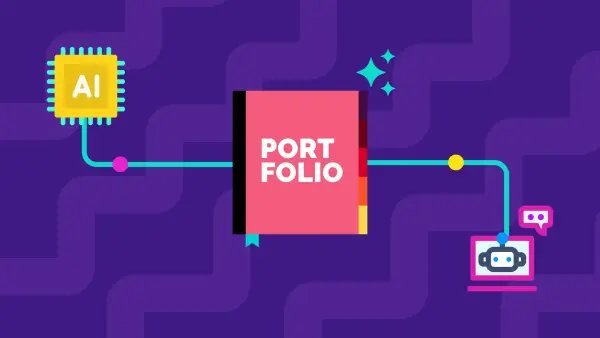
Here’s how hiring managers actually evaluate AI skills: they don’t quiz you on definitions — they look at what you’ve built. One shipped project beats ten certificates, and one project with honest documentation (“here’s what worked, here’s what I’d do differently”) beats three polished demos. If you’re choosing between another course and building something, build. The course teaches you what can be done; the project teaches you what you can do — and only the second one gets you hired. Document the build publicly (a write-up, a repo, a demo video) and you’ve simultaneously learned the skill and created the proof. That’s the whole game in two moves.
The meta-skill underneath all of this is learning speed. The specific skills that matter in 2026 will be partially obsolete by 2028 — that’s not a reason to despair, it’s the whole game. People who learn fast and build in public will keep riding each wave. People waiting for the definitive curriculum will still be waiting.