
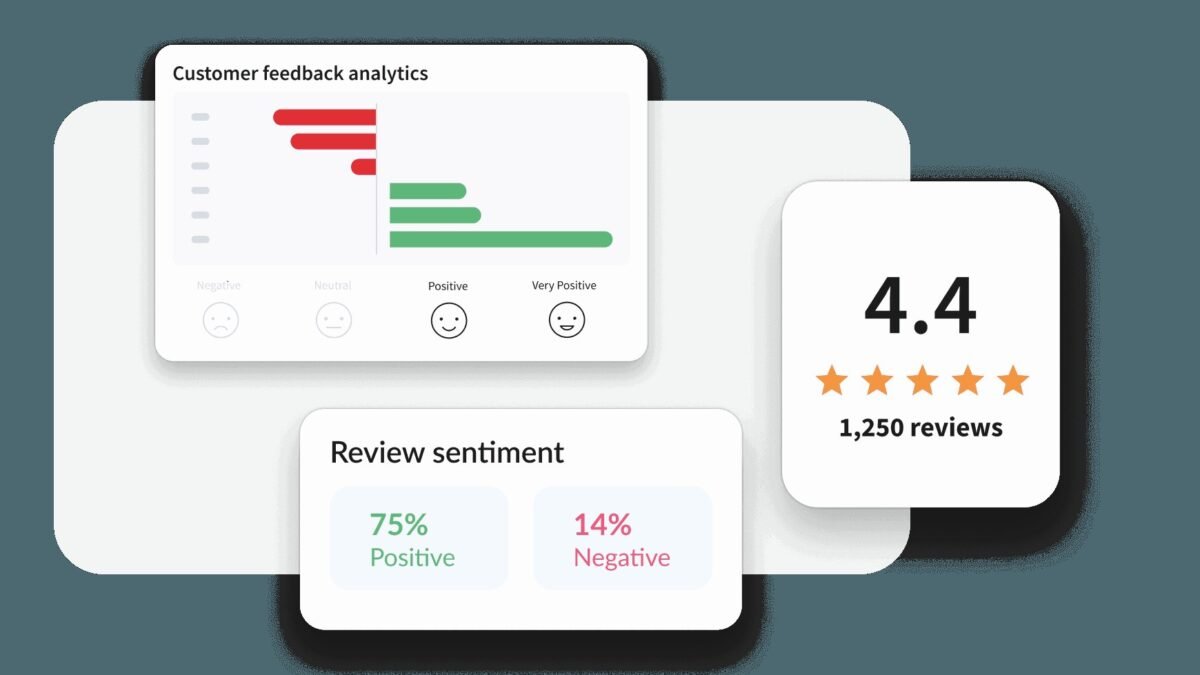
Somewhere in your last 2,000 customer reviews is the exact reason people buy from you — and the exact reason some of them leave. Nobody on your team will read all 2,000. Learning how to use AI to analyze customer reviews at scale turns that unread mountain into the most honest market research you’ll ever get: unfiltered, specific, and free.
I’ve set up review-analysis pipelines for businesses from ten reviews a month to ten thousand, and the pattern is always the same: the first analysis surfaces at least one surprise that changes a decision. Here’s the complete playbook.
How to use AI to analyze customer reviews at scale
What you’re actually trying to learn
Before touching any tool, define the questions. Review analysis answers four things:
- What do customers love? (Double down on it — in product, in marketing copy, everywhere.)
- What do they hate? (Fix it in priority order — frequency × severity.)
- What words do they use? (Steal this language verbatim for your ads and product pages. Customers write better copy than copywriters because it’s true.)
- What’s changing? (New complaints appearing? Praise shifting? Trends beat snapshots.)
The analysis toolkit: from simple to serious
Level 1: The conversational deep-dive (start here)
Export your reviews to a spreadsheet, paste batches into a frontier AI chat tool, and ask real questions: “What are the top 5 complaints, with example quotes?” “What do 5-star reviewers mention that 3-star reviewers don’t?” “Summarize what people say about shipping.” This takes an afternoon and delivers 80% of the value. Anthropic‘s Claude is particularly strong at this kind of qualitative synthesis — it quotes accurately and resists the urge to invent themes that aren’t there.
Level 2: Structured theme extraction
For ongoing analysis, you want structure: every review tagged by theme (shipping, quality, support, price…), sentiment scored, and tracked over time. Modern sentiment analysis goes far beyond positive/negative — aspect-based analysis tells you customers love the product but hate the packaging, which is a completely different insight than “mixed reviews.” Several tools do this out of the box for major review platforms; AI tools for e-commerce stores include options with review analytics built in.
Level 3: The always-on pipeline
Reviews flow in via API → AI classifies, scores, and extracts themes → dashboard updates → alerts fire on anomalies (sudden spike in “broken on arrival” mentions). This is the AI for business dashboards pattern applied to feedback. Worth building once review volume exceeds what a human can skim weekly — roughly 100+ reviews/month.
The prompts that produce gold
Generic “summarize these reviews” gives generic output. These work better:
- “List every specific product defect mentioned, with how many reviewers mention each.” — turns complaints into a prioritized fix list.
- “What do reviewers say they’d tell a friend about this product? Quote them.” — pure marketing gold, in customers’ own words.
- “Compare what 5-star and 2-star reviewers say about [specific feature].” — reveals expectation gaps.
- “What questions do reviewers seem to have before buying?” — tells you what’s missing from your product page.
- “Group these into themes I haven’t thought of.” — the surprise-finder. Some of the best insights come from categories you wouldn’t have predefined.
Traps that corrupt your analysis
Fake and incentivized reviews pollute the data — filter obviously suspicious ones before analysis, and be extra skeptical of themes that appear only in 5-star reviews posted in clusters. Sampling bias: reviewers skew toward the delighted and the furious; the quiet majority’s opinion is underrepresented. Treat findings as directional, then validate. AI hallucination: always demand quotes for claimed themes — if the AI can’t show you three real reviews supporting a theme, the theme doesn’t exist. Ignoring the verbatims: the summary is for the meeting; the actual quotes are for understanding. Read a sample yourself, always.
Turning insights into action (the part everyone skips)
Analysis without action is trivia. Build the loop: monthly review-insights summary → top 3 findings → each assigned an owner and a decision (fix product, change copy, adjust policy, or deliberately ignore with reasoning). The companies that do this consistently develop an almost unfair advantage — they’re steered by thousands of customer voices while competitors guess. How marketers use AI shows where these insights plug into the broader growth machine.
Competitor reviews: the free intelligence
Here’s the move most businesses miss: run the same analysis on your competitors’ reviews. Their one-star reviews are your product roadmap (“customers keep complaining about X’s delivery times — let’s guarantee faster ones”). Their five-star reviews reveal what the market values most (position against it or match it deliberately). Their three-star reviews — the thoughtful, balanced ones — are pure gold: nuanced takes on what the category gets right and wrong. This is entirely legal, entirely public data, and almost nobody does it systematically. Set up the same pipeline for your top three competitors, review quarterly, and you’ll spot market gaps before they do. The best market research isn’t asking customers what they want — it’s listening to what they’re already telling your competitors.
Start this week: export your reviews, run the Level 1 analysis, and find your one surprise. I promise there’s at least one — there’s always one. The businesses that listen at scale hear things their competitors miss, and in 2026, listening at scale finally costs almost nothing.



