
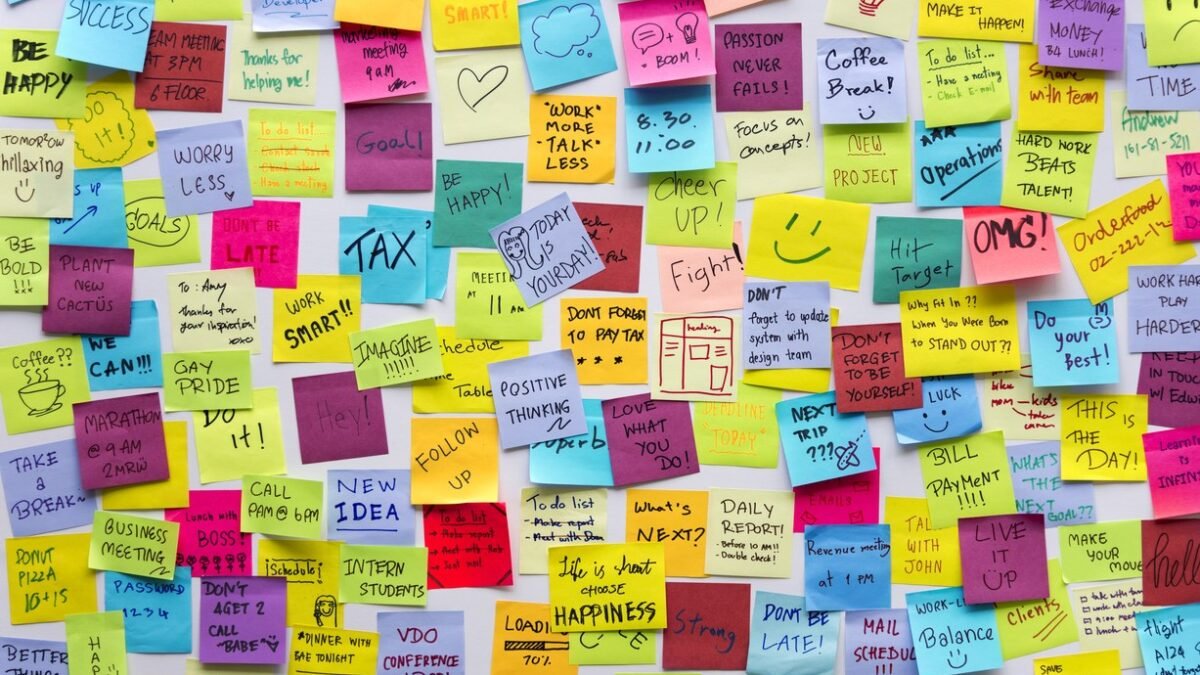
“Give me 10 business ideas” gets you 10 generic ideas. There’s an art to AI brainstorming that most people miss — and it’s the difference between a list you’ll never use and a session that actually produces something. How to use ChatGPT for brainstorming ideas effectively? It’s about structure, constraints, and the critical second half everyone skips: selection.
How to use ChatGPT for brainstorming ideas
Why AI brainstorming beats solo (and where it doesn’t)
Classical brainstorming research says groups generate more ideas than individuals — but also that groups converge prematurely and anchor on early suggestions. AI gives you the volume of a group without the conformity: it never gets tired, never judges, and generates the weird ideas humans self-censor. What it doesn’t give you: taste (knowing which ideas are good), lived experience (the insight from your actual life), and the social spark (ideas colliding between people). AI brainstorming is divergent thinking at scale — you supply the convergent judgment.
The techniques (beyond “give me ideas”)
1. Constrain creatively
Constraints breed creativity — the research is clear, and AI responds dramatically to them. “Business ideas” → mush. “Business ideas for a former teacher with $2,000, no coding skills, in a small town, that can start this month” → actually useful. Add constraints on: budget, timeline, skills, location, business model, what to avoid. Each constraint sharpens the output.
2. Role-storm
“Give me ideas as a skeptical VC / as a 10-year-old / as someone from 1950 / as my toughest competitor.” Different personas access different idea spaces. The competitor frame is especially powerful for business: “how would my competitor put me out of business?” generates defensive innovations you’d never reach directly.
3. The bad ideas technique
“Give me 10 terrible ideas for X.” Then: “what makes each terrible, and is there a good idea hiding inside?” Deliberately bad ideas bypass the inner critic and often contain inverted good ideas. AI does this gleefully — and the inversions are frequently the most original outputs of the session.
4. Combine and mutate
“Combine idea #3 and #7 into something new.” “Take idea #2 and make it 10x bigger / 10x cheaper / for a different audience.” Forced combination is a classic creativity technique that AI executes tirelessly — most combinations fail, but the failures are cheap and the hits are real.
5. SCAMPER it
The classic creativity framework, AI-accelerated: Substitute, Combine, Adapt, Modify, Put to other uses, Eliminate, Reverse — applied to your product, content, or problem. “Apply SCAMPER to my newsletter” generates 7 directions of innovation in one prompt.
6. The 100-idea sprint
“Give me 100 [content ideas / product names / angles], numbered, no explanations.” Volume first — explanations slow generation and trigger premature judging. Then you curate: pick the 10 interesting ones, develop those. The 100-idea list always contains 3-5 gems hiding among the filler; the curation is the skill.
The selection half (where sessions usually die)
Generating 50 ideas and stopping is entertainment, not brainstorming. The session needs a second half:
- Filter fast: kill the obviously unworkable immediately — no mourning.
- Score the survivors: “Score these 10 ideas on feasibility (1-5), impact (1-5), and excitement (1-5). Show the math.” AI scoring isn’t truth, but it forces explicit criteria.
- Stress-test the top 3: “What’s the strongest argument against each?” Survivors of this are real candidates.
- Sleep on it: the final selection benefits from unconscious processing. Shortlist today, decide tomorrow.
- Prototype the winner small: brainstorming ends where testing begins — the smallest possible validation step, this week.
Brainstorming for specific domains
- Content ideas: constrain by audience, format, and angle — “20 video ideas for beginner gardeners, contrarian angles only.” See AI story generators for narrative ideation.
- Business ideas: constrain by your unfair advantages — ideas matched to your skills, network, and capital beat generic “opportunities.”
- Names and titles: generate in batches by style (professional, playful, mysterious), then test top contenders with real humans — AI can’t feel what lands.
- Problem-solving: “we’re losing customers at onboarding — generate 20 hypotheses for why, then 20 experiments to test them.” Hypotheses are brainstormable; validation isn’t.
The mindset
Brainstorming with constraints from real life
The most productive brainstorming constraint isn’t creative — it’s real: your actual limitations. “Generate ideas I can execute with 5 hours a week and $500” produces a fundamentally different (and more useful) list than unconstrained ideation. Same for skills (“using only what I already know”), timeline (“shippable in 30 days”), and audience (“for my existing 200 email subscribers”). Reality-constrained brainstorming feels less fun than blue-sky sessions and produces ten times the actionable output. The fantasy list is entertainment; the constrained list is a plan. Run both if you like — dream first, then constrain. But never skip the constrained pass, because that’s where ideas become intentions.
Treat AI brainstorming as divergence outsourced, convergence retained. The AI’s job: volume, variety, the unexpected. Your job: constraints, curation, the final call — and the real-world knowledge the AI lacks. Get better answers from ChatGPT sharpens the prompting; OpenAI‘s models supply the raw generative power. And pair ideation with execution — ChatGPT for daily planning turns the winning idea into next actions. Ideas are cheap; the session that ends with a tested shortlist and a next step is the one that mattered.



