
“It looks right” is the most dangerous sentence in data work. So let’s get specific: how accurate is AI-generated SQL? I’ll give you the benchmark numbers, the real-world numbers, and — most importantly — the patterns of how it fails, because knowing the failure modes is what keeps you safe.
How accurate is AI-generated SQL: The Full Breakdown
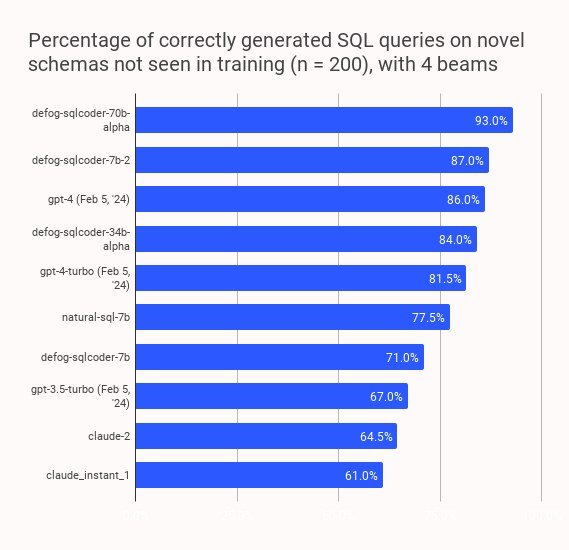
On academic text-to-SQL benchmarks with schema provided, top models score roughly 80–90% execution accuracy on standard difficulty queries. In real-world usage — business analysts generating routine queries with schema context — practitioners report similar: the vast majority of straightforward queries run correctly on the first try.
But accuracy degrades predictably with complexity:
- Simple SELECT/WHERE/GROUP BY: ~90–95% correct. Boring and reliable.
- Multi-table joins with business logic: ~75–85%. Usually right; verify the join conditions.
- Complex analytics (window functions, nested subqueries): ~60–75%. Treat as a strong draft.
- Ambiguous requirements: accuracy becomes meaningless — it’ll confidently answer the wrong question.
How It Fails (The Important Part)
AI SQL errors have signatures. Wrong join types — INNER when it should be LEFT, silently dropping rows. This is the most dangerous failure because the result looks plausible. Fan-out duplication — joining through a one-to-many relationship and double-counting. Your revenue report just doubled; congratulations. NULL mishandling — NULLs don’t equal anything, including each other, and AI-generated WHERE clauses sometimes forget. Date boundary errors — timezones, inclusive/exclusive ranges, the eternal confusions.
The verification protocol: check row counts against expectations, eyeball samples (does this customer list look right?), test edge cases (what happens with NULLs?), and for anything that drives decisions, have a second pair of eyes. This is the same discipline as generating SQL properly — schema in, verification out.
Getting to 99%: The Human-AI Partnership
Here’s the thing the benchmarks miss: AI doesn’t need to be 100% accurate to be transformative. It needs to be fast at drafting and you need to be fast at verifying. An analyst who generates in 30 seconds and verifies in 5 minutes beats one who writes from scratch in an hour — and the verification step is where real SQL skill gets built. The endgame isn’t trusting AI blindly; it’s a workflow where AI’s speed and your judgment combine into something neither achieves alone.
Building a Verification Checklist for Your Team
Turn accuracy awareness into team process. For every AI-generated query that drives a decision or a report: schema confirmed — the AI saw the actual schema, not a remembered version. Row counts sane — compared against a known baseline or expectation. Join logic reviewed — someone checked the join types and conditions, the number-one failure point. Edge cases probed — NULLs, empty sets, boundary dates handled deliberately.
Sample eyeballed — 20 rows reviewed by a human who knows the business. Business terms defined — “active,” “revenue,” “churn” mean what the stakeholder thinks they mean. Second eyes on high-stakes queries — anything touching money, headcount, or external reporting gets human review, full stop. Laminate it, pin it, make it ritual. Teams that verify mechanically get AI speed with human reliability; teams that trust blindly get fast wrong answers — the most expensive kind.
When Accuracy Doesn’t Matter (And When It’s Everything)
Not every query deserves the full verification ritual. Exploratory analysis — “let me look at the shape of this data” — can tolerate imperfection; you’re orienting, not deciding. If the query’s wrong, you’ll see something odd and iterate. The cost of error is minutes. Learning and practice similarly: generated queries you’re studying don’t need production-grade verification, just enough checking to learn from.
But accuracy is everything when the query drives decisions: revenue reports, headcount planning, investor updates, anything external-facing. It’s everything when the query modifies data — an UPDATE or DELETE generated from natural language deserves paranoia-level review (better yet, write those by hand). And it’s everything at scale: a query that’s subtly wrong on a sample is catastrophically wrong on 100 million rows. Calibrate your verification to the stakes. The professional skill isn’t “always verify maximally” — it’s knowing which queries deserve the full checklist and which deserve a glance. That judgment, applied consistently, is what separates analysts who use AI well from those who just use it fast.
The One Habit That Prevents 90% of Problems
If you take one habit from this guide, make it this: always check the row count first. Before examining a single value, ask “how many rows should this return, roughly?” If the answer surprises you, stop — something’s wrong with the joins or filters, and every value in the result is suspect until you find it. This one check catches wrong join types, fan-out duplication, and filter mistakes — the three biggest accuracy killers — in seconds. Experienced analysts do this reflexively; it’s the cheapest verification in data work and the most skipped by beginners. Row count first, everything else second.
The Takeaway
Expect 80–95% accuracy on standard queries with schema — excellent for drafting, insufficient for blind trust. Learn the failure signatures (wrong joins, fan-out, NULLs, dates), verify mechanically, and you’ll get AI speed with human reliability. And yes, it really does work from natural language — just verify like a professional.
Benchmark background: the BIRD benchmark tracks text-to-SQL progress on realistic databases.



