
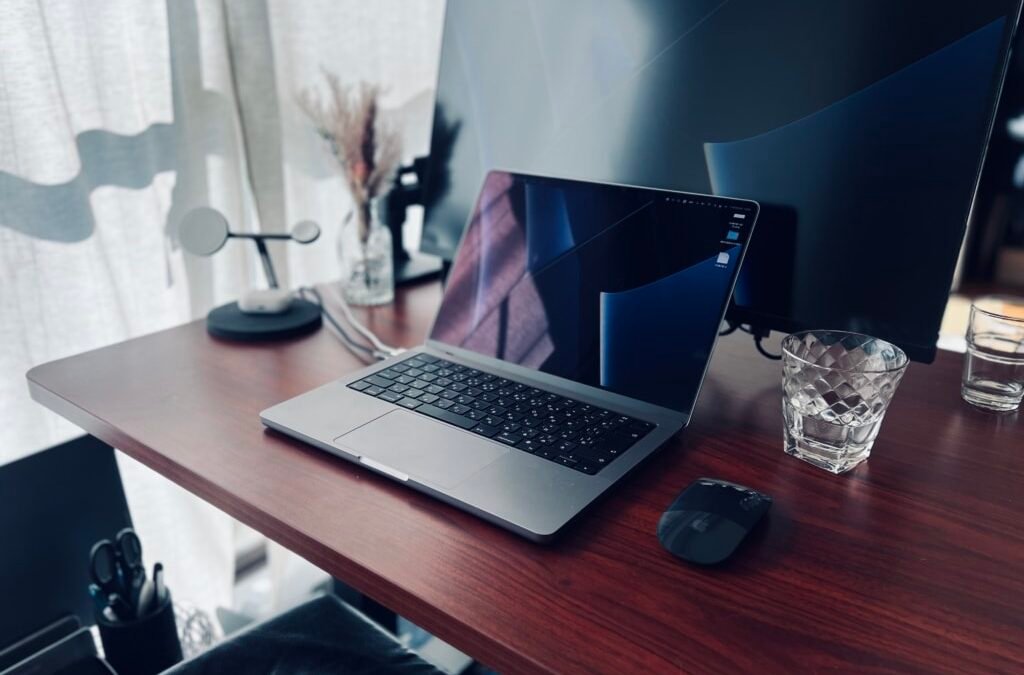
Apple’s unified memory architecture turned Macs into surprisingly capable AI machines. But can MacBooks run local LLMs well with unified memory? The answer is a genuine yes — with caveats about which Mac, which models, and what “well” means. Here’s the real-world picture.
Why Unified Memory Matters for LLMs
Quick technical bit: in most computers, the CPU and GPU have separate memory pools — a model too big for the GPU’s VRAM simply won’t run there. Apple’s M-series chips use unified memory: one pool shared by CPU and GPU. A MacBook with 32GB unified memory can load a ~30GB model and run it on the GPU — something impossible on a PC with a 12GB graphics card and 32GB system RAM.
In practice: your total unified memory minus ~6-8GB (for macOS) ≈ your usable model size. That’s the whole formula.
What Runs Well by Configuration
- 8GB Mac (base M1/M2/M3): small models only (3B-7B quantized). Usable for basic chat and simple tasks. Honestly constrained — you’ll feel the limits.
- 16GB Mac: the sweet spot for casual use. Runs 7B-13B quantized models comfortably — DeepSeek R1 8B, Llama 8B variants. Good speed, genuinely useful.
- 24-36GB Mac: runs 14B-32B models well. This is where local AI gets seriously capable — strong reasoning, good coding help.
- 48GB+ (M-series Pro/Max): 32B-70B quantized models. Approaches cloud-model quality for many tasks. The dream setup for local AI enthusiasts.
- 128GB Mac Studio: the halo — runs 70B+ models that rival frontier cloud models on many tasks. Serious money, serious capability.
Real-World Performance (Tokens/Second)
Rough speeds for quantized models on Apple Silicon (varies by chip generation — M4 faster than M1):
- 7B-8B models: 30-60+ tok/s on most M Macs. Feels instant — faster than cloud for short responses.
- 13B-14B: 15-30 tok/s. Comfortable conversational pace.
- 32B: 8-15 tok/s on 36GB+ Macs. Usable, slightly deliberate.
- 70B: 4-8 tok/s on high-memory Macs. Slow but workable for quality-critical tasks.
For reference: average reading speed is ~4-5 words/second. Anything above ~15 tok/s feels responsive.
Setup: Ollama on Mac (5 Minutes)
- Download Ollama from ollama.com (native Mac app).
ollama pull deepseek-r1:8b(or llama3.1, qwen2.5 — experiment).ollama run deepseek-r1:8b— you’re chatting locally.- Optional: Open WebUI for a ChatGPT-like interface.
Apple Silicon is so well-supported that this “just works” — no CUDA wrangling, no driver issues. Full walkthrough: running DeepSeek locally.
Mac vs. PC for Local LLMs
- Mac advantages: simplicity (no GPU config), memory efficiency (unified pool), power efficiency (runs cool and quiet, great on battery), excellent software support.
- PC advantages: raw speed with high-end NVIDIA GPUs (a 4090 smokes any Mac on tokens/sec for models that fit), upgradability, lower cost per GB at the high end.
- Verdict: Macs win on convenience and memory capacity per dollar at mid-range; PCs win on absolute speed if you invest in big GPUs. For most people wanting local AI without fuss, Mac is the easier path.
Limitations to Know
- Not frontier quality: even 70B local models trail GPT-4-class cloud models on hard reasoning. Local = private and free, not best-in-class.
- Memory is fixed: you can’t upgrade Mac RAM later. Buy for your future needs, not just today’s.
- Battery/heat: sustained generation uses significant power — fine plugged in, noticeable on battery.
Real-World Performance (What to Actually Expect)
- 70B models (Q4): on M3 Max 128GB — roughly 8-15 tokens/second. Usable for chat and drafting; slow for long generations. On 36GB machines — don’t bother; it won’t fit well.
- 32B models (Q4): the sweet spot for 36-48GB Macs. ~20-30 tok/s on M3 Pro/Max. Genuinely useful daily driver.
- 7-14B models (Q4-Q8): fast everywhere — 40-80+ tok/s even on base M1/M2. Great for coding assistance, quick tasks, offline chat.
- The honest truth: cloud models (GPT-4-class) still outperform local models on hard tasks. Local wins on privacy, offline access, cost (after hardware), and customization — not raw capability.
- Thermal reality: sustained inference heats the machine. MacBook Airs throttle under long sessions; Pros handle it better. Desktop Macs (Studio) are ideal.
Software Stack (What to Install)
- Ollama: the easiest start — one command to run models. Best for beginners. (See running Llama locally.)
- LM Studio: GUI-based, great for experimenting with different models and settings. Best for tinkerers.
- MLX: Apple’s ML framework — best performance on Apple Silicon, but more technical. Best for developers.
- llama.cpp: the engine under most tools; direct use is for advanced users who want maximum control.
- Start here: Ollama + a 7B model. Five minutes to working local AI. Expand from there based on what you actually need.
When Local Makes Sense (Decision Framework)
- Choose local when: privacy is paramount (client data, health, legal), you need offline access, you have high volume (API costs add up), you want customization (fine-tuning), or you’re tinkering/learning.
- Choose cloud when: you need maximum capability, you want zero setup, your usage is light, or you need the latest models.
- Choose both: the common answer — cloud for hard tasks, local for private/quick ones. They complement; neither replaces the other.
- Hardware guidance: buying a Mac for local LLMs? Prioritize unified memory (64GB+ for serious use). The neural engine matters less than RAM capacity for LLM inference.
For the technical foundations, Wikipedia’s overview of large language models explains the architecture these local models are built on.
Bottom Line
Can MacBooks run local LLMs well with unified memory? Yes — genuinely well. 16GB handles capable 8B models; 32GB+ opens up serious 14B-32B territory; the unified architecture means your whole RAM pool is usable for models. Setup takes 5 minutes with Ollama. It won’t replace frontier cloud models for the hardest tasks, but for private, free, offline AI, the Mac is one of the best local-LLM machines you can buy.



