
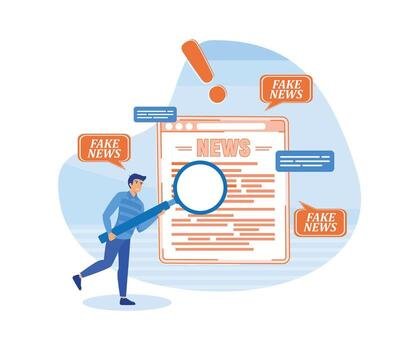
Can you trust what ChatGPT tells you? How accurate is ChatGPT for factual questions? The honest answer: impressively often, and dangerously confidently when it’s wrong. I’ve fact-checked hundreds of its answers across history, science, coding, and current events. The pattern is consistent — and once you understand it, you can use the tool with much more confidence.
How Accurate Is ChatGPT for Factual Questions? The Real Picture
On well-established knowledge — historical dates, scientific concepts, math, widely documented facts — modern ChatGPT models are accurate the vast majority of the time. Ask about the causes of World War I or how photosynthesis works, and you’ll get a solid answer. The trouble starts at the edges:
- Recent events: anything after training data is guesswork unless it searches the web — and even then, synthesis can garble details
- Obscure topics: the less documented something is, the more likely the model fills gaps with plausible fiction
- Precise figures: statistics, dates, and measurements are the most common hallucination targets
- Citations: it invents paper titles, URLs, and quotes with alarming confidence — never trust a citation without checking
- Niche expertise: legal, medical, and tax specifics are where confident errors do real damage
The core problem isn’t the error rate — it’s that wrong answers sound exactly like right ones. There’s no “I’m unsure” tone. That confident delivery is the thing you have to train yourself to see through.
Why Hallucinations Happen (Briefly)
ChatGPT predicts likely text, it doesn’t retrieve facts from a database. When it’s uncertain, it generates the most plausible-sounding continuation rather than saying “I don’t know.” Newer models are better at expressing uncertainty and refusing to guess, but the tendency is baked into how they work. Understanding this one idea — fluency is not the same as truth — is the single most important thing for using AI safely.
How to Get More Accurate Answers
You can materially improve reliability with a few habits:
- Ask it to search the web for anything current or precise — grounded answers beat recalled ones
- Demand sources — then actually open them; invented citations collapse under one click
- Ask for uncertainty: “tell me which parts of this answer you’re least sure about” works surprisingly well
- Break complex questions apart — verify each step rather than accepting a long chain of reasoning wholesale
- Cross-check high-stakes claims with authoritative sources before acting on them
For a systematic approach, learn how to fact-check ChatGPT’s responses — it’s a short routine that catches most errors. And for research-heavy questions, ChatGPT’s deep research mode produces cited reports that are far easier to verify than chat answers.
Accuracy by Use Case: What’s Safe, What’s Not
- Brainstorming and drafting: very safe — errors don’t matter much at the idea stage
- Learning concepts: mostly safe — great for understanding, verify before citing
- Code: moderately safe — test everything; it writes plausible-but-broken code regularly
- Health, legal, financial advice: not safe as a final authority — useful for orientation, dangerous as gospel
- Academic citations: unsafe — always verify every reference independently
I’ve seen students fail assignments over invented citations and professionals embarrass themselves with hallucinated statistics in presentations. The tool didn’t fail them — the verification step did.
The Confidence Trap: Why Wrong Answers Sound Right
Here’s the uncomfortable core of the accuracy problem: ChatGPT generates fluent text, and humans instinctively equate fluency with truth. A hallucinated statistic arrives in the same confident tone as a real one. There’s no verbal equivalent of a nervous glance.
This matters because it defeats our normal lie-detection. With humans, uncertainty leaks through — hedging, pauses, vagueness. ChatGPT’s wrong answers have none of that. The model doesn’t know it’s guessing; it’s just generating the most likely continuation, and likely-sounding text sounds true.
The defense is procedural, not intuitive: don’t try to feel which answers are wrong. Instead, verify by category — numbers, citations, recent events, and high-stakes claims get checked; everything else gets proportional skepticism. You can’t out-intuit a fluent machine, but you can out-process it.
Frequently Asked Questions
What is ChatGPT’s error rate on factual questions?
There’s no single number — it varies hugely by topic, recency, and specificity. Well-established knowledge: very high accuracy. Obscure topics, precise figures, and recent events: much lower. Treat it as a spectrum, not a stat.
Are newer models more accurate?
Yes, measurably — each generation hallucinates less and expresses uncertainty better. But the fundamental pattern (confident errors at the edges) persists.
Can I trust it for health questions?
For understanding concepts: reasonably. For decisions about your health: no — verify with medical professionals and authoritative sources. Always.
How do I check if a citation is real?
Search the exact title in quotes. Fake citations collapse instantly under this test — the paper simply doesn’t exist. It takes ten seconds and catches the most dangerous error type.
The Takeaway
ChatGPT is accurate enough to be genuinely useful and unreliable enough to require verification — both things are true. Use it freely for exploration, drafting, and learning. Verify independently for facts that matter, especially numbers, citations, and anything involving health, law, or money. Build the fact-checking habit once — a quick guide is at our fitness planning walkthrough’s safety section for the general principle — and you’ll get the best of the tool without the downside. The model keeps improving, but your judgment remains the final filter. Read more about the model itself at ChatGPT on Wikipedia.




1 Comment