How AI Is Changing Hollywood and Content Creation
Few industries illustrate AI’s double edge better than entertainment. How AI is changing Hollywood is a story of genuine creative liberation colliding with real fear — indie filmmakers empowered, working actors anxious, studios recalculating everything. In 2026, AI touched nearly every stage of production, from script development to final localization. Here’s what’s actually happening on the ground, beyond the hype and the panic.
Pre-Production: The Quiet Revolution
The least controversial, most transformative AI use in Hollywood is the one audiences never see: pre-visualization. Directors now block out entire films with AI-generated previz in days instead of paying specialized teams for weeks. Writers’ rooms use AI for brainstorming and research (not final scripts — the guilds drew lines). Concept artists iterate hundreds of visual directions before committing. This phase is almost pure upside: faster, cheaper exploration of creative choices.
Production: Virtual Everything
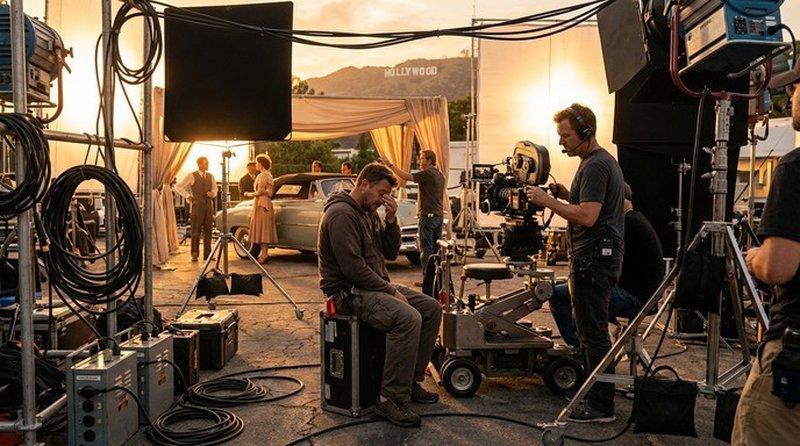
- Virtual production + AI: LED volumes (pioneered on The Mandalorian) now pair with AI-generated environments — any location, any era, no travel.
- De-aging and digital doubles: matured from uncanny gimmick to standard tool for stunts, scheduling fixes, and yes, bringing back younger versions of actors.
- AI extras and crowds: digital crowd replication, once a VFX-heavy lift, is increasingly routine — which is exactly why background actors are nervous.
- Voice and dubbing: AI dubbing with accurate lip-sync is part of why AI video got scary good — and it’s changing the economics of global distribution.

The Labor Story: Guilds, Strikes, and the New Contracts
You can’t discuss AI in Hollywood without the labor fight. The 2023 strikes established the template: writers and actors won guardrails on AI — consent and compensation for digital replicas, limits on AI-generated writing credit. In 2026, those contracts are being stress-tested as the technology improves. The core tension is unchanged: studios see cost savings, workers see existential threat to livelihoods.
The honest, uncomfortable middle: AI will reduce demand for certain roles (routine VFX work, background acting, basic localization) while creating others (AI supervision, virtual production artists, new creative roles we can’t yet name). The transition is genuinely painful for the people in the shrinking roles — “learn to adapt” is easy to say from outside. What the guilds bought is time and a seat at the table, which matters enormously. Industry coverage of these shifts appears regularly in The Hollywood Reporter and Variety.
Content Creation Beyond Hollywood: The Democratization Story
Outside the studio system, the story is brighter. A solo creator in 2026 commands production capabilities that required a team and six figures in 2020:
- YouTubers generate b-roll, thumbnails, and localized versions with AI.
- Indie filmmakers previz, score (see the state of AI music in 2026), and create VFX shots on laptop budgets.
- Musicians prototype arrangements and generate full AI music videos from scratch.
- Podcasters and streamers automate editing, clipping, and repurposing.
The result is a Cambrian explosion of content — and a discovery problem. When anyone can produce, taste and audience trust become the scarce resources. The creators winning aren’t the ones with the best AI tools; they’re the ones with the clearest voice.

What Audiences Actually Think
Audience attitudes in 2026 are pragmatically mixed. Viewers don’t care how the sausage is made if the story is good — but they react badly to feeling deceived (undisclosed AI actors, fake “documentary” footage) and to content that feels soulless. The emerging norm: AI assistance is fine, AI replacement of human creative decisions is suspect, and transparency is increasingly expected. Studios are learning that “made with AI” isn’t a selling point — good stories are.
Where This Goes Next
- Personalized content: early experiments in AI-customized cuts (different edits for different viewers) — promising and slightly dystopian.
- Interactive narratives: AI-driven stories that respond to viewers; gaming and film converging.
- Global-first production: AI localization making every production natively global from day one.
- The authenticity premium: as synthetic content floods every feed, verifiably human-made work may command a premium — the “organic” label for media.
AI in Film Production: A Practical Workflow for Indies
Concretely, here’s how an indie filmmaker uses AI across a production in 2026. Development: AI-assisted brainstorming and research, with the writer making every creative decision — the guilds’ line, and a sensible one. Pre-production: AI previz for every complex scene (blocking, lighting, camera movement approved before spending a dollar on set), AI-generated concept art for production design. Production: virtual production backgrounds, AI-assisted scheduling optimized around actor availability and location costs. Post: AI assembly cuts from dailies, automated dialogue cleanup, AI-assisted color matching across shoots, temp score from generative music tools replaced by the human composer for final. Distribution: AI dubbing and lip-sync for 20+ language versions, AI-cut trailers in multiple lengths, localized marketing assets.
The throughline: AI compresses the expensive, time-consuming middle of each phase while humans keep the creative decisions. A $50,000 production in 2026 can look like a $500,000 production from 2020 — not because AI replaced the filmmaker, but because it replaced the waiting, the rework, and the “we can’t afford that shot.” For creators, the practical advice is unglamorous: learn one AI tool per production phase deeply rather than ten superficially. Depth beats breadth when the deadline hits.
The Audience Trust Equation
Here’s the framework I use for AI in entertainment: trust = transparency × quality ÷ deception risk. Audiences accept AI assistance when they’re not misled about it and the result is good — AI-assisted indie films, AI-localized content, AI previz all pass this test easily. Trust collapses when audiences feel deceived: undisclosed AI performers, synthetic “documentary” footage, fake viral moments. The practical rule for creators: disclose AI involvement proudly when it’s assistive, and never when it would mislead — because “would mislead” means don’t do it at all.
This also explains the emerging authenticity premium. As synthetic content floods feeds, verifiable human craft — live performance, behind-the-scenes process, the artist’s hand visible in the work — commands growing audience loyalty and, increasingly, price premiums. Smart creators in 2026 show their process: studio vlogs, “how we made this” breakdowns, live sessions. In an age of infinite generated content, proof of human effort is the differentiator that can’t be faked — or rather, faking it is exactly what destroys trust. The creators winning the AI era aren’t hiding their tools; they’re showcasing their judgment.
FAQ
Is AI replacing actors in Hollywood?
Not wholesale — audiences connect with real humans, and guild contracts now require consent and compensation for digital replicas. What’s shrinking is demand for background work, routine voice work, and some stunt categories. Lead acting remains stubbornly human, and likely stays that way.
Can AI make a full movie by itself?
Technically you can generate feature-length AI video, but “a movie” — coherent story, intentional direction, emotional truth — still needs humans. What AI can do solo tops out around shorts, music videos, and experimental pieces. The director’s judgment remains the bottleneck, not the rendering.
How are writers using AI in 2026?
For brainstorming, research, outlining, and breaking story — with guild rules generally barring AI from credited writing and requiring disclosure. Most working writers describe it as a useful junior assistant: good for volume, bad for taste.
Will AI make content better or worse?
Both, simultaneously. More good content (lower barriers for talented outsiders) and vastly more mediocre content (frictionless production). Curation, taste, and trusted voices become more valuable — which is arguably the real story of AI in entertainment.
How can indie creators compete with AI-generated content?
Do not compete on volume — compete on trust and taste. Show your process, build direct audience relationships, and make work with a point of view. AI can generate infinite content but cannot generate why anyone should care about yours. The creators winning right now are the ones audiences believe, not the ones who publish most.
The Bottom Line
How AI is changing Hollywood comes down to leverage: the same tools that threaten specific jobs empower entire new classes of creators. The industry’s pain is real and deserves honesty, not dismissal — but so is the creative opening. In the end, audiences reward stories that move them, however they were made. The filmmakers and creators who thrive will be the ones who master the tools without surrendering the judgment that makes work worth watching.