
A video of a CEO announcing bankruptcy. A politician saying something outrageous. Your boss asking for gift cards over a video call. Knowing how to tell if a video is an AI deepfake has gone from tech curiosity to basic digital literacy — here’s how to do it.
How to Tell If a Video is an AI Deepfake
- Hands and teeth. Still the classic failure points — extra fingers, melting teeth, hands that morph when moving. Check them first.
- Blinking and micro-expressions. Early deepfakes rarely blinked naturally; modern ones do, but emotional micro-expressions around the eyes still look slightly “performed.”
- Skin texture. Over-smoothed, waxy, or inconsistently detailed skin — sharp face on blurry neck is a red flag.
- Lighting inconsistencies. Face lit differently from the background, or shadows that don’t match the scene.
- Edge artifacts. Flickering or shimmer around the jawline, hair, and ears where the fake face meets the real head.
- Background warping. Straight lines (doorframes, tiles) bending subtly near the subject.
Caveat: the best deepfakes now pass casual inspection. Visual tells catch the mediocre 90%, not the top 10%.
Audio clues
Cloned voices often have slightly flat prosody — correct words, wrong music. Listen for: unnatural pauses, mispronounced names the real person would know, missing breath sounds, and audio quality that doesn’t match the supposed recording environment (studio-clean voice over “phone call” video).
Verification tools and techniques
- Reverse image/video search — is this clip appearing elsewhere with different claims?
- Check the source. Did it come from the person’s verified account or a random repost? Most deepfake damage spreads through decontextualized reposts.
- Look for corroboration. A real event produces multiple angles, news coverage, official statements. A deepfake usually stands alone.
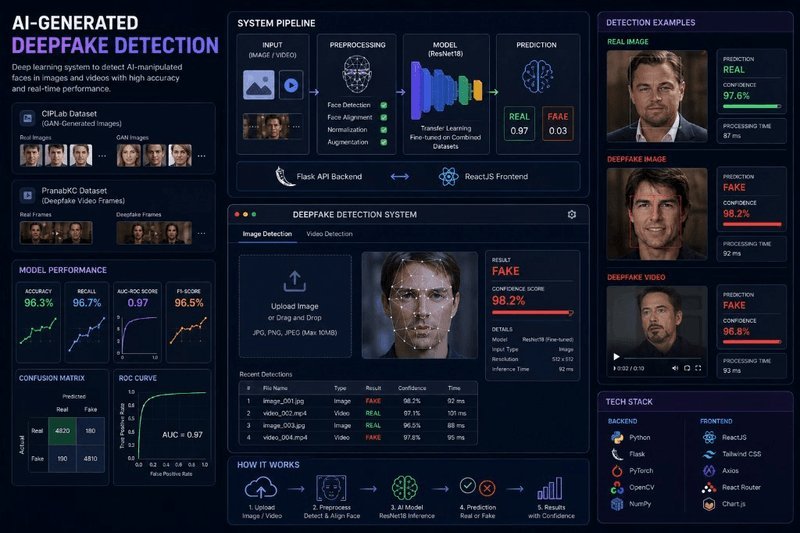
- Detection tools (Intel FakeCatcher, various academic detectors, platform labels) — useful signals, not verdicts; detectors have false positives and negatives.
- C2PA credentials — cryptographically signed provenance showing a video’s origin and edit history. Absence proves nothing (most real video lacks it too), but presence from a trusted source is strong evidence.
The mindset that actually protects you
Technical detection is an arms race you’ll lose eventually. What works: slow down emotionally charged content — deepfakes weaponize outrage and urgency; verify before sharing — you’re the distribution network; use out-of-band confirmation for anything involving money or access (call the person on a known number). For video calls specifically: ask the person to do something unscripted (turn profile, hold up fingers) — real-time deepfakes still struggle with novel physical actions.
Protecting yourself and others
Detection is defensive; prevention and response complete the picture. Protect yourself: limit public voice/video samples that could train clones, use platform verification (blue checks matter for impersonation defense), and establish communication norms with your circle (family safe words, callback verification for unusual requests). If you’re a public figure or executive, consider proactive monitoring services that scan for synthetic media using your likeness.
If you encounter a suspected deepfake: don’t share it (sharing is the attacker’s goal — even debunking shares spread the content), report it to the platform, check fact-checking organizations, and if it’s defamatory or fraudulent, preserve evidence and consult authorities. For organizations: have a deepfake incident plan before you need one — who decides, who communicates, what the holding statement says. The companies that handle deepfake incidents well prepared in calm times.
Resources for staying informed
This arms race moves fast. Follow: academic detection research (new papers monthly), platform transparency reports (Meta, TikTok publish detection stats), and the Wikipedia deepfake article for a maintained overview of techniques and countermeasures. And teach the skills in this article to your family — the most vulnerable targets are the ones who’ve never heard the word “deepfake.”
Teach this to your family this week
Knowledge only protects people who have it — share these skills deliberately. This week: have one 15-minute conversation with your most vulnerable family member (usually an older parent or grandparent). Don’t lecture — show them one real example of a deepfake, teach the safe word concept, and establish the callback rule together. Make it collaborative, not condescending: “scammers are getting really sophisticated — let’s set up our family protection.”
Make it stick: revisit casually in a month (“have you gotten any weird calls lately?”), share news stories about scams when they appear (real examples reinforce), and extend the conversation to friends and neighbors — community awareness protects everyone. The people most at risk are the ones nobody talked to. Be the person who talks to them.
Practical takeaway
- Check hands, teeth, skin texture, lighting, and edges — catches most fakes.
- Listen for flat prosody and environment mismatches in audio.
- Verify source and corroboration; lone viral clips deserve skepticism.
- Slow down on emotional content; confirm money/access requests out-of-band.
- Detection is an arms race — healthy skepticism beats any single tool.
Keep exploring
If you found this useful, these related guides go deeper:



