
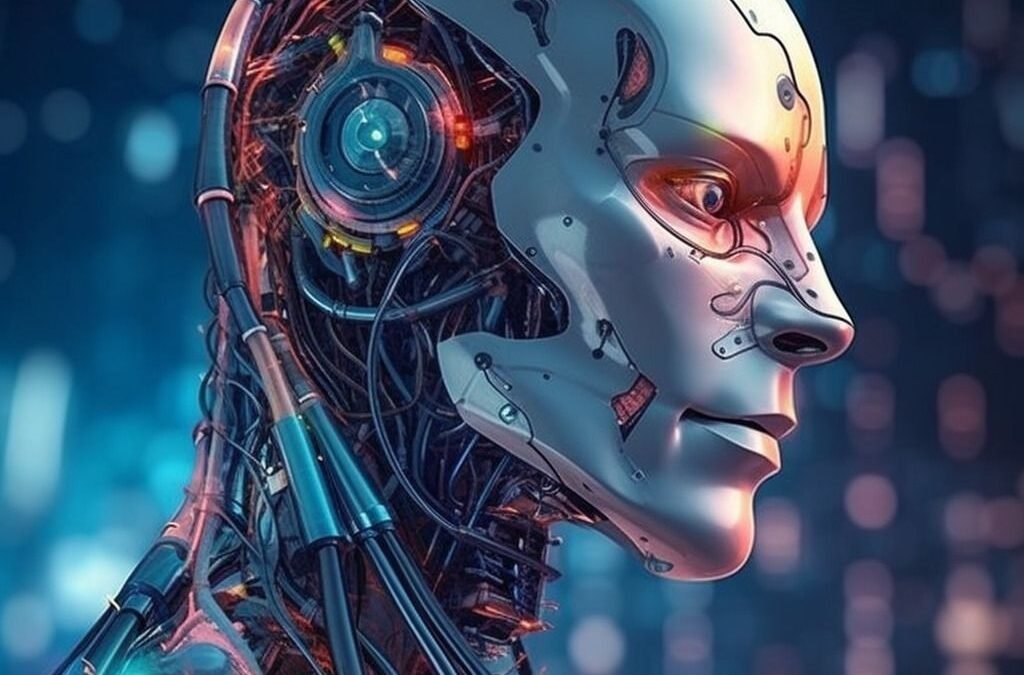
Chatbots were the opening act, not the main event. If you’re wondering what comes after chatbots in AI, you’re asking the right question at the right time — because the shift is already underway. Here’s where things are headed, minus the hype.
1. AI Agents: From Answering to Doing
The biggest shift happening right now: agents. A chatbot answers questions; an agent does things — books the flight, files the expense report, monitors your inbox, runs the research project end-to-end. Instead of “here’s how to plan a trip,” it’s “your trip is planned, here are the confirmations.” The technology is here but clumsy; expect it to get dramatically more reliable over the next 2-3 years. This is the single most important trend to understand — how AI agents differ from chatbots is the article I’d read first.
2. Multimodal Everything
Text chat was a limitation, not a feature. The next interfaces blend voice, vision, video, and action seamlessly — you talk to your AI while it sees what you see through your glasses or phone camera, pulls up visuals, and acts. We’re already seeing early versions: voice mode conversations, video understanding, screen sharing with AI. In five years, typing prompts will feel as dated as dial-up.
3. Personal Superintelligence (Your AI That Knows Everything)
The long-term vision every major lab is chasing: an AI that knows your entire context — your work, your goals, your health data, your preferences — and proactively helps. Not “ask me anything” but “I noticed X, I handled Y, you should know Z.” This is powerful and, frankly, a privacy minefield. The companies that solve the trust problem here win the next decade.
4. Embodied AI: Robots That Actually Work
AI is getting a body. Humanoid robots and specialized machines are moving from labs to warehouses and, eventually, homes. The language models turned out to be surprisingly good robot brains — tell a robot “clean up the spill” in plain English and it figures out the steps. Timeline honesty: warehouses and factories first (already happening), homes much later. Your Roomba isn’t becoming a butler next year.
5. AI-Native Software (No Interface at All)
The subtlest shift: software that doesn’t look like AI at all. Your email client just drafts better. Your spreadsheet just understands what you mean. The chatbot disappears into the tools, and “using AI” stops being a distinct activity. Most people will experience the AI revolution not as a chatbot, but as everything getting quietly smarter.
What This Means for You (Practically)
- Learn agents now. The chatbot skills you have transfer directly — prompting, verifying, iterating. Agent skills (delegation, oversight, setting boundaries) are the next layer.
- Don’t over-invest in chatbot-specific tricks. Interfaces will change; judgment won’t.
- Watch the careers angle: prompt engineering as a job is evolving into broader AI orchestration roles.
- Stay skeptical of timelines. Every lab promises the future is 2 years away. The direction is right; the dates are usually wrong.
What Comes After Chatbots in AI: What It Means for You
- Learn agents now. The chatbot skills you have transfer directly — prompting, verifying, iterating. Agent skills (delegation, oversight, setting boundaries) are the next layer.
- Don’t over-invest in chatbot-specific tricks. Interfaces will change; judgment won’t.
- Watch the careers angle: prompt engineering as a job is evolving into broader AI orchestration roles.
- Stay skeptical of timelines. Every lab promises the future is 2 years away. The direction is right; the dates are usually wrong.
How to Prepare (Without Predicting Perfectly)
You don’t need to predict the future exactly — you need to be positioned for the direction of travel:
- Build AI-direction skills now. Prompting, verifying, delegating to AI, reviewing AI output — these transfer to agents directly. The interface changes; the judgment doesn’t.
- Automate one workflow this month. Pick something tedious you do weekly and build an AI-assisted version. The experience of delegating to AI (and checking its work) is the core skill of the agent era.
- Stay tool-agnostic. Don’t marry one chatbot. The winners will be people comfortable across platforms — which is why a multi-chatbot practice is good preparation, not just good tactics.
- Invest in what AI can’t do: relationships, trust, taste, accountability, physical presence. As AI handles more cognitive execution, human differentiators appreciate.
- Follow the money, not the demos. Impressive demos are cheap; deployed, reliable, ROI-positive AI is the real signal. Watch what businesses actually pay for — that’s where the durable trends are.
What Probably Won’t Change
Amid all the transformation, some constants: humans will still want to talk to humans for things that matter. Trust will still be earned slowly. Judgment will still be valuable — arguably more valuable when AI makes execution cheap. And the people who thrive will be those who combine AI leverage with human wisdom, not those who pick a side. The future belongs to the centaurs — human-AI teams — not to either alone.
Preparing for What’s Next (Practical Steps)
You don’t need to predict the future precisely to prepare for it. Build AI fluency now — the skill of directing AI systems transfers across every paradigm shift, from chatbots to agents to whatever follows. Automate one workflow with current agent tools to understand the paradigm firsthand. Follow the infrastructure — agent protocols, tool-use standards, and robotics progress signal where things are heading better than hype cycles do. And stay adaptable: the specific tools will change, but the meta-skill of learning new AI interfaces quickly compounds forever. The people thriving in 2030 won’t be those who predicted 2030 correctly — they’ll be those who kept experimenting through every wave. For context on the agent wave specifically, see our look at the expanding AI landscape.
For the underlying technology, Wikipedia’s overview of large language models explains what these systems actually are and aren’t.
Bottom Line
What comes after chatbots? Agents that act, multimodal interfaces you talk to, AI woven invisibly into every tool, and eventually robots. The chatbot era taught the world what AI can do; the next era is about what it can do for you, autonomously. The winners won’t be the people who mastered chatbots — they’ll be the people who learned to direct AI systems toward real outcomes. Start building that muscle now.



