
People use “AI” and “machine learning” interchangeably, and honestly, most of the time nobody corrects them. But there is a real difference between machine learning vs AI, and understanding it takes about three minutes — after which a lot of tech news suddenly makes more sense. The question we answer here: what is machine learning vs ai.
Here’s the one-sentence version: AI is the big goal — machines doing intelligent things. Machine learning is the main method we’re using to get there — machines learning from data instead of from explicit instructions. That’s it. Everything else is elaboration.
What is machine learning vs AI?
The nesting doll: AI > Machine Learning > Deep Learning
Think of it as three nested boxes. The biggest box is artificial intelligence: any technique that lets machines perform tasks that would require intelligence in humans. That includes a lot of old-school approaches — chess programs that brute-force millions of positions, expert systems from the 1980s that followed hand-written “if the patient has X and Y, consider Z” rules. No learning involved. Still AI, by the classic definition.
Inside that sits machine learning: the subfield where instead of hand-writing rules, you feed the machine examples and it figures out the rules itself. Show it 10,000 pictures labeled “cat” or “not cat,” and it learns to tell the difference. Show it a million past house sales with their features, and it learns to predict prices. The machine writes its own program, in a sense, derived from data.
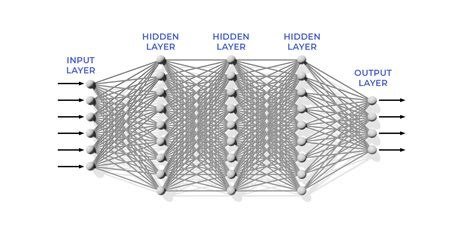
Inside machine learning sits deep learning: machine learning using multi-layered neural networks. This is the technique behind virtually every AI headline since 2012 — image recognition, speech recognition, and now large language models. Deep learning is a subset of machine learning, which is a subset of AI. Anyone who tells you otherwise is selling something.
Why the distinction actually matters
It’s not just pedantry. The distinction explains real things:
- Why AI fails weirdly: Machine learning systems learn correlations from data, not understanding. That’s why an image classifier can be fooled by a few changed pixels, and why language models confidently state falsehoods — they’re pattern-matchers, not reasoners, at their core.
- Why data is everything: A machine learning system is only as good as its training data. Biased data in, biased decisions out — there’s no step where the machine independently develops ethics.
- Why “AI” products vary wildly: A spam filter (machine learning, narrow, reliable) and a chatbot (deep learning, broad, occasionally hallucinating) are both “AI” but behave completely differently because the methods differ.
- What “not AI” looks like: Plenty of software marketed as AI is just regular programming — a scheduling app with fixed rules isn’t machine learning just because the landing page says “AI-powered.”
Where generative AI fits
The current boom — ChatGPT, image generators, video models — is deep learning applied to generation rather than classification. Instead of learning “is this a cat?”, the model learns “given this prompt, what comes next?” Trained on vast amounts of text, images, or video, it becomes startlingly good at producing new examples. For the full breakdown of that branch, see applied AI vs generative AI, and if you want to try the tools themselves, best generative AI tools is the practical companion.
The takeaway
Next time someone says “AI,” ask yourself which box they mean. Are they talking about the grand goal (machines acting intelligently), the dominant method (learning from data), or the specific hot technique (neural networks)? Most confusion in AI discussions — including some very confident LinkedIn debates — comes from people arguing about different boxes without realizing it.
Common misconceptions, cleared up
A few things people get wrong constantly. “AI learns like humans do.” Not really — machine learning finds statistical patterns in data; it doesn’t understand, reason, or have common sense in the human sense. A model that aces a test may fail a trivial variation a child would handle. This is why “it passed the bar exam” headlines mislead: pattern-matching the test isn’t practicing law. “More data always helps.” Up to a point — then data quality dominates. A smaller, cleaner dataset often beats a massive noisy one, which is why curated training data is a competitive moat. “Neural networks are modeled on the brain.” Loosely inspired by, not modeled on — the resemblance is about as deep as an airplane’s resemblance to a bird. Useful inspiration, not simulation. “AI is either intelligent or it’s not.” Intelligence isn’t binary — modern AI is superhuman at some pattern tasks and subhuman at basic reasoning, simultaneously. The sooner you replace “is it intelligent?” with “what is it good at?”, the sooner the field makes sense.
And one honest footnote: the boundaries are blurrier than textbooks suggest. Modern systems mix learned and hand-built components freely, and researchers argue endlessly about definitions. The nesting doll is a map, not the territory — but it’s a map that makes the territory navigable, which is all a beginner needs.




1 Comment