
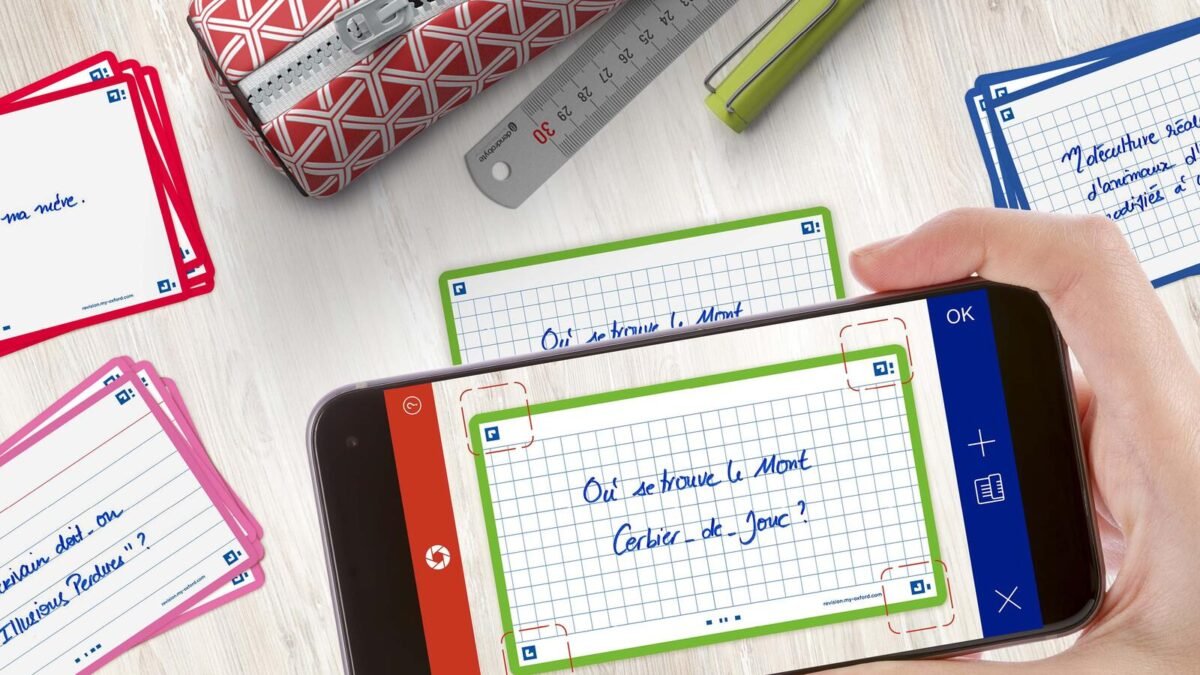
Your phone is already your study companion — might as well make it a smart one. What is the best AI app for studying in 2026? I’ve tested the AI study apps students actually use: flashcard generators, AI tutors, note-taking assistants, exam prep tools. Here’s the ranking by what students need most: turning study time into retained knowledge.
What Makes a Great Study App
- Active recall built in: quizzing, flashcards, self-testing — not just content display.
- Spaced repetition: scientifically-timed review scheduling. Non-negotiable for memorization-heavy subjects.
- Personalization: adapts to your weak areas, not one-size-fits-all.
- Low friction: 5-minute sessions between classes should be productive.
- Cross-device: phone for review, laptop for deep work, synced.
The Best AI Study Apps
1. ChatGPT / Claude Mobile Apps — Best AI Tutors
The most powerful “study app” is the AI chatbot already on your phone. The Socratic tutoring prompt (“Quiz me on [topic], one question at a time, increasing difficulty”) beats most dedicated study apps for deep learning. Voice mode turns commutes into study sessions. Free tiers suffice for most students. Our study guide details the methods.
2. Anki + AI-Generated Cards — Best for Memorization
Anki remains the spaced-repetition king. The AI upgrade: generate cards with a chatbot (“Create 30 Anki flashcards from these lecture notes, front/back format, focusing on high-yield concepts”), import, and let the algorithm schedule reviews. This combo — AI generation + Anki scheduling — is the most effective memorization system available.
3. Quizlet (AI Features) — Best Ready-Made Sets
Quizlet’s AI generates study sets from your materials, with learn modes, practice tests, and games. The massive library of existing sets (made by other students) is the real asset — search your course or textbook before creating from scratch.
4. NotebookLM — Best for Course Material Mastery
Upload your actual course documents and get AI-generated study guides, FAQs, and audio overviews grounded in your materials. The “study from your sources” approach eliminates the generic-content problem and keeps you focused on testable material.
5. Khan Academy (Khanmigo) — Best Structured Learning
For subjects Khan Academy covers, the AI tutor provides structured, curriculum-aligned help with the pedagogy of a real educator baked in. Best for filling foundational gaps, not just exam cramming.
The 15-Minute Daily System
- Morning (5 min): Anki reviews — spaced repetition on the bus.
- Between classes (5 min): AI quiz on today’s topic — one focused session.
- Evening (5 min): “What did I learn today? Quiz me on the gaps.” — consolidation.
Fifteen minutes daily beats three hours Sunday. The science is unambiguous on this.
App Strategy by Subject
- Memorization-heavy (anatomy, vocab, law): Anki + AI-generated cards. Nothing beats spaced repetition here.
- Concept-heavy (physics, economics): AI Socratic tutoring — understanding, not recall.
- Problem-solving (math, coding): AI practice problems with step-by-step feedback.
- Writing-heavy (essays, humanities): AI feedback on drafts and arguments.
Broader guides: study assistants, tools for students, budget plans.
What Is the Best AI App for Studying on the Go?
Mobile study has a different shape than desk study: short sessions, fragmented attention, thumb-typed input. The apps that work best embrace this — voice input for asking questions hands-free, concise answers suited to small screens, offline access to saved materials.
Best mobile study patterns: flashcard-style quizzing during commutes, voice Q and A while walking (explaining concepts aloud is powerful), and capturing confusion in the moment (ask when you wonder, not later when you have forgotten).
Sync matters: your study materials, quiz history, and weak spots should follow you from phone to laptop. The best study app is the one whose mobile and desktop experiences feel like one continuous system. ChatGPT’s mobile app handles this cross-device continuity well.
Offline access is the mobile study killer feature: download materials, save AI explanations, queue questions for later. Commutes through dead zones and flights become study sessions. Check what your tools cache offline before you need it — discovering the gap mid-flight is frustrating.
Review saved materials weekly: spaced repetition only works if the reviews actually happen. Schedule a fixed weekly session — consistency matters more than duration.
Charge your devices before study sessions: dead batteries kill momentum. Small logistics, big difference in consistency.
Pair mobile study with desk review: quick capture on the go, deep processing later. Each mode has its strength.
Keep sessions short and frequent: twenty focused minutes beats two distracted hours. Your brain consolidates in the gaps.
The Bottom Line
What is the best AI app for studying? The chatbot on your phone (as a Socratic tutor) for deep learning, Anki with AI-generated cards for memorization, NotebookLM for course-specific mastery, Quizlet for ready-made sets. But apps don’t study — you do. The best system is 15 focused minutes daily with active recall, not 3 hours of passive review. Pick one app, use it daily, and let consistency compound.



