
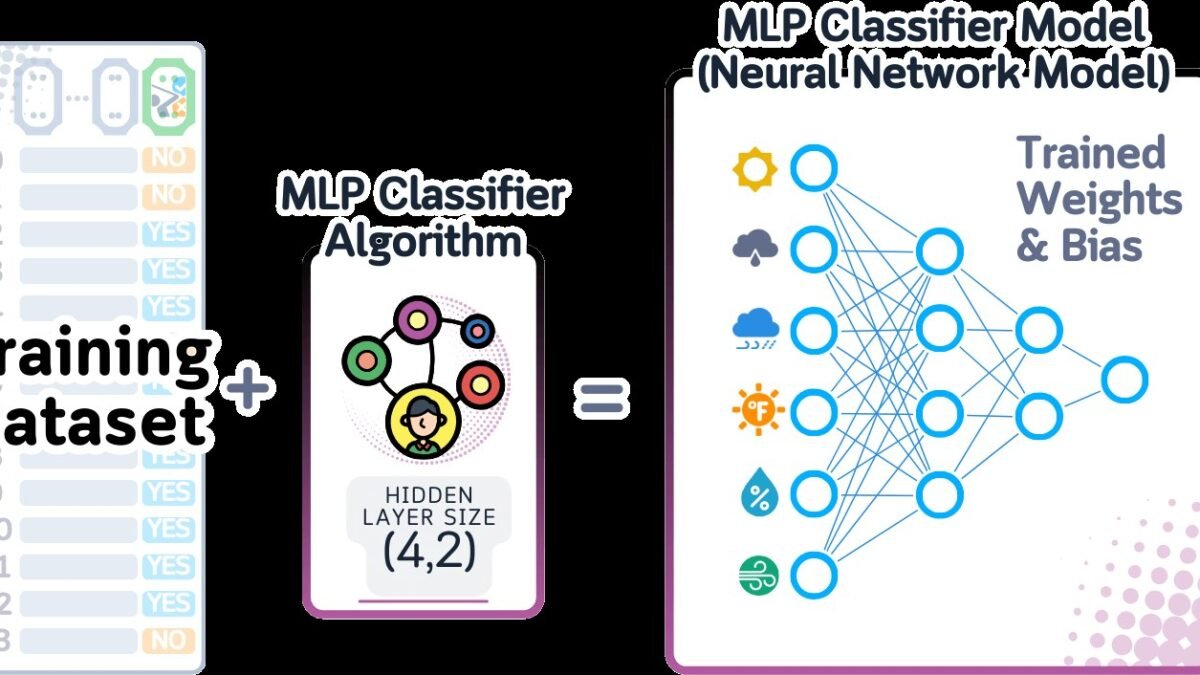
“Training AI models with prompts” sits at the intersection of prompting and machine learning — using carefully designed prompts and prompt-response pairs to fine-tune or instruct-tune models. Whether you’re fine-tuning an open model or building instruction datasets, certain practices separate successful training from expensive failure. Here’s what actually works.
1. Start With Data Quality, Not Quantity
The single most important factor: your training examples must be excellent. A thousand sloppy prompt-response pairs produce a sloppy model; a hundred superb ones produce a good one. Every training example should be:
- Correct: factually right, well-reasoned. Errors in training data become errors in the model.
- Consistent: same style, same format conventions across examples. Inconsistency teaches inconsistency.
- Diverse: covering the range of real inputs — including edge cases and tricky variants.
- Representative: matching what the model will actually face in production, not idealized toy cases.
2. Design Instructions Like a System Prompt
Training prompts should be clear, explicit, and structured — the same principles as good system prompts:
- State the task unambiguously.
- Specify the desired output format.
- Include constraints and boundaries.
- Use consistent formatting across all examples (delimiters, labels, structure).
Inconsistent instruction formatting across training examples is a silent killer — the model learns the noise instead of the task.
3. Include Negative and Edge Examples
Don’t just train on happy paths. Include:
- Refusal examples: prompts the model should decline, with proper refusal responses.
- Ambiguous inputs: with clarifying-question responses, not guesses.
- Adversarial examples: injection attempts and jailbreak tries, with correct handling.
- “I don’t know” cases: questions beyond the model’s knowledge, answered honestly.
Models learn boundaries from boundary examples. Without them, you get a model that’s helpful right up until it confidently does something it shouldn’t.
4. Evaluate Before, During, and After
- Baseline first: test the base model on your task before training. You need to know if training actually helped.
- Hold out test data: never train on your evaluation set. 10-20% held out, evaluated blind.
- Check for regressions: fine-tuning can degrade general abilities (“catastrophic forgetting”). Test general tasks too, not just your target.
- Human evaluation: automated metrics miss nuance. Have humans rate a sample of outputs on your actual quality criteria.
What Practices Are Beneficial for Training AI Models With Prompts: Evaluate Continuously
- Baseline first: test the base model on your task before training. You need to know if training actually helped.
- Hold out test data: never train on your evaluation set. 10-20% held out, evaluated blind.
- Check for regressions: fine-tuning can degrade general abilities (“catastrophic forgetting”). Test general tasks too, not just your target.
- Human evaluation: automated metrics miss nuance. Have humans rate a sample of outputs on your actual quality criteria.
5. Iterate on Data, Not Just Hyperparameters
When training underperforms, beginners tune learning rates; experts fix the data. Common data fixes:
- Remove low-quality or contradictory examples.
- Add examples for the specific failure modes you observe.
- Rebalance: if the model overdoes one behavior, check if your data overrepresents it.
- Clarify ambiguous instructions in the training prompts themselves.
6. Document Everything
Record: data sources, filtering criteria, prompt templates used, training config, eval results per version. Training is experimental science — without records, you can’t reproduce wins or diagnose losses. Future-you (or your team) needs the lab notebook.
Instruction Tuning vs. Fine-Tuning (Clarified)
People conflate these — here’s the distinction:
- Instruction tuning: training on diverse (instruction, response) pairs to make the model better at following instructions generally. This is how base models become helpful assistants. Broad, general-purpose.
- Task fine-tuning: training on narrow examples for one specific task (classify support tickets, write in brand voice). Narrow, specialized.
- What “training with prompts” usually means: creating high-quality instruction-response pairs for either purpose. The prompt design practices in this article apply to both.
Data Curation in Practice (The 80% of the Work)
- Collect: gather candidate examples — human-written, model-generated-then-verified, or transformed from existing data.
- Filter: remove low-quality, contradictory, or off-task examples. Be ruthless — 1,000 great examples beat 10,000 mediocre ones.
- Standardize: consistent formatting across all examples. Same delimiters, same structure, same style conventions.
- Balance: check distribution — task types, difficulty levels, edge cases. Rebalance what’s skewed.
- Validate: human review of a random sample. If the sample has issues, the dataset has issues.
- Split: train/validation/test — never evaluate on training data.
Common Training Failures (And Their Data Causes)
- Model is sycophantic: training data rewarded agreement. Add examples of respectful disagreement.
- Model is verbose: training examples were long. Add concise examples; reward brevity.
- Model hallucinates: training data contained confident falsehoods. Clean ruthlessly; add “I don’t know” examples.
- Model ignores format: inconsistent formatting in training. Standardize.
- Model forgot general skills: catastrophic forgetting — mix general examples into training, or use lighter-touch methods.
The pattern: every model behavior traces to training data. When the model misbehaves, the fix is almost always in the data, not the hyperparameters. Internalize this and you’ll debug training like a pro. For the prompting foundations underlying all of this, see system prompt design.
Measuring Prompt-Training Success
How do you know your prompt-training practices are working? Task success rate: the percentage of outputs meeting your quality bar — track it over time; it should climb. Iteration count: how many refinements before acceptable output — good practices reduce this. Consistency score: run the same prompt 10 times; measure output variance on key dimensions. Transfer test: do practices that work on one task improve others? Generalizable practices are the valuable ones. Cost per good output: tokens spent divided by acceptable outputs — the ultimate efficiency metric. Review these monthly. Prompt training is an optimization process; what gets measured gets improved. And remember the meta-lesson from using AI to improve your prompts — the AI itself can help you evaluate and refine your training practices.
Bottom Line
Beneficial practices for training AI models with prompts: obsess over data quality and consistency, design instructions like system prompts, include negative and edge examples, evaluate rigorously with held-out data, iterate on data before hyperparameters, and document everything. The model learns what you show it — so show it excellence, boundaries, and variety.
Deeper: OpenAI’s fine-tuning guide.



