
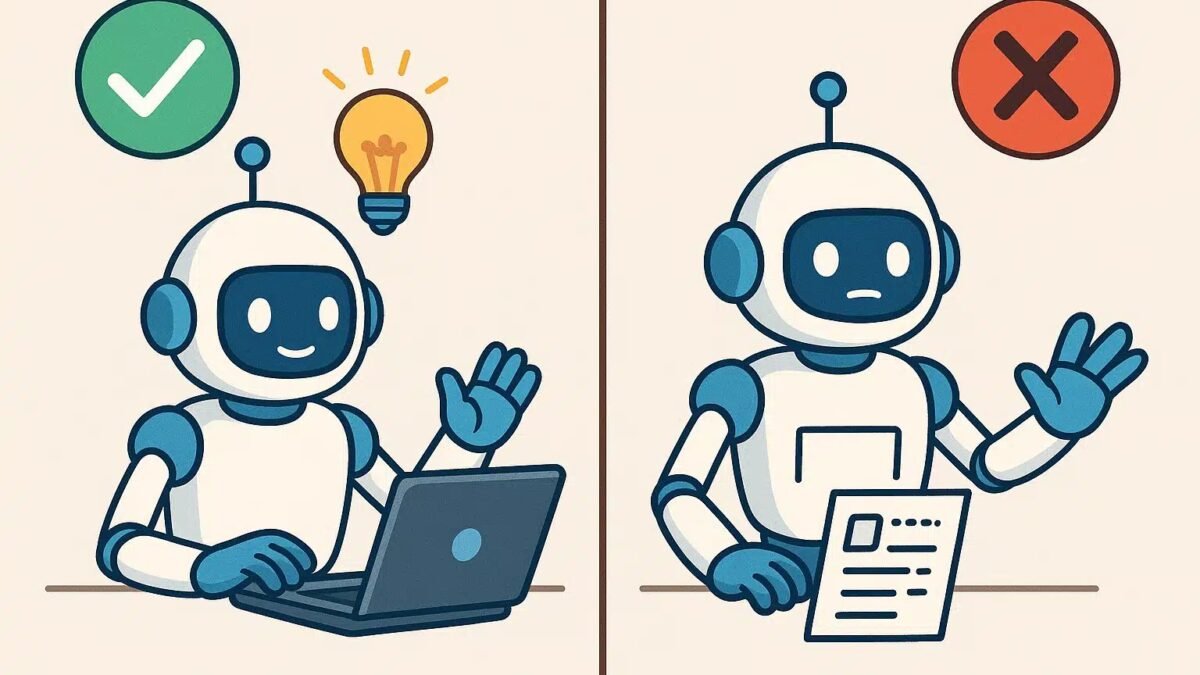
Here’s the thing about why is generative AI bad: the basics are easy to pick up, but doing it well is a different story. I’ve watched people nail it and I’ve watched people crash and burn, and the difference is almost never talent — it’s approach. Let me walk you through why is generative AI bad the way I’d explain it to a friend over coffee.
Fair warning: some of this will contradict what you’ve read elsewhere. That’s fine. I’d rather be honest than agreeable.
Why is Generative AI Bad: The Honest Version
So why is generative AI bad — what’s the real story? The short answer: it’s complicated, but less complicated than it looks. There are real mechanics underneath — technical, economic, human — and once you see those, the surface-level confusion clears up fast. Let’s dig into what’s actually going on.
Most takes on why is generative AI bad are either too alarmist or too dismissive, and the truth sits in the middle. There are genuine points worth taking seriously, plus a fair amount of misunderstanding. My suggestion: understand the actual mechanisms before locking in a strong opinion. Headline-based opinions age badly.
AI concepts sound intimidating until someone explains them plainly, and then they’re almost disappointingly simple. A neural network is just math that learns patterns from examples. Deep learning is neural networks with more layers. Machine learning is the umbrella term. Once you have those three sentences, about 80% of AI news articles become readable. For broader context, how neural networks work is a solid reference on the wider landscape.
What to focus on first
- Start with the big picture before the details: what AI is, what machine learning means, what makes generative AI different. Foundations first — everything else clicks faster.
- Learn one concept at a time and connect it to something you’ve seen. Read about neural networks, then think about how your phone recognizes your face. Concrete beats abstract.
- Follow the data: whenever you learn about a model, ask what it was trained on. That single question explains most of what models can and can’t do.
- Try things hands-on as you learn. Generate an image, chat with a model, watch where it shines and where it stumbles. Theory sticks better with experience attached.
- Revisit the basics every few months. The field moves fast, but the fundamentals barely change — and each revisit will make more sense than the last.
Before we go further, a quick note: everything below assumes you’re starting from zero on the details but not on common sense. Adjust the pace to yours. If you’re short on time, skim the headings first — they tell the story on their own — then come back for the parts that matter to you.
The mistakes almost everyone makes
Here’s the analogy I use with friends: traditional software is like giving someone turn-by-turn directions. Machine learning is like showing them the route a thousand times until they can drive it themselves. Generative AI is like teaching them to drive anywhere — they might take a weird shortcut sometimes, but they can handle roads they’ve never seen. If you want to go deeper on a related angle, I also wrote about What is AI disruption — it pairs well with this.
- Learning only from hype sources. Mix in skeptical voices; the truth is usually in the middle.
- Skipping straight to advanced topics without foundations. The jargon only makes sense on top of basics.
- Thinking AI “understands” like humans do. It predicts patterns — brilliant, but fundamentally different.
- Never trying the tools hands-on. Reading about AI without using it is like learning swimming from a book.
The thing most beginners get wrong is thinking AI “understands” things the way we do. It doesn’t — it predicts, based on patterns. That’s why it’s brilliant at some tasks and bizarrely wrong at others. A model can write a beautiful essay about a topic and confidently invent the citations. Knowing this one fact will save you from 90% of AI disappointments. This connects closely to What is responsibility of developers using generative AI, which covers the adjacent piece of the puzzle.
What I’d tell a friend about this
My honest opinion: you don’t need to understand the math to understand AI well enough to use it wisely. What you need is a good mental model — what these systems are actually doing, where they’re strong, where they’re unreliable. Most confusion about AI comes from either mystifying it (“it’s magic”) or dismissing it (“it’s just autocomplete”). The truth is more interesting than both, and more useful.
Worth a read alongside this: Google DeepMind’s research — it frames the bigger picture nicely.
The bottom line
If you take one thing from this, let it be this: start small, stay curious, and verify what matters. why is generative AI bad isn’t a mountain to conquer in a weekend — it’s a skill you build one practical step at a time. Pick the single action from this guide that fits your situation, do it this week, and build from there. That’s how real progress happens — not in a burst of enthusiasm, but in steady, deliberate reps. And when you’re ready for the next step, check out my guide on How can generative AI be used responsibly as a tool.



