
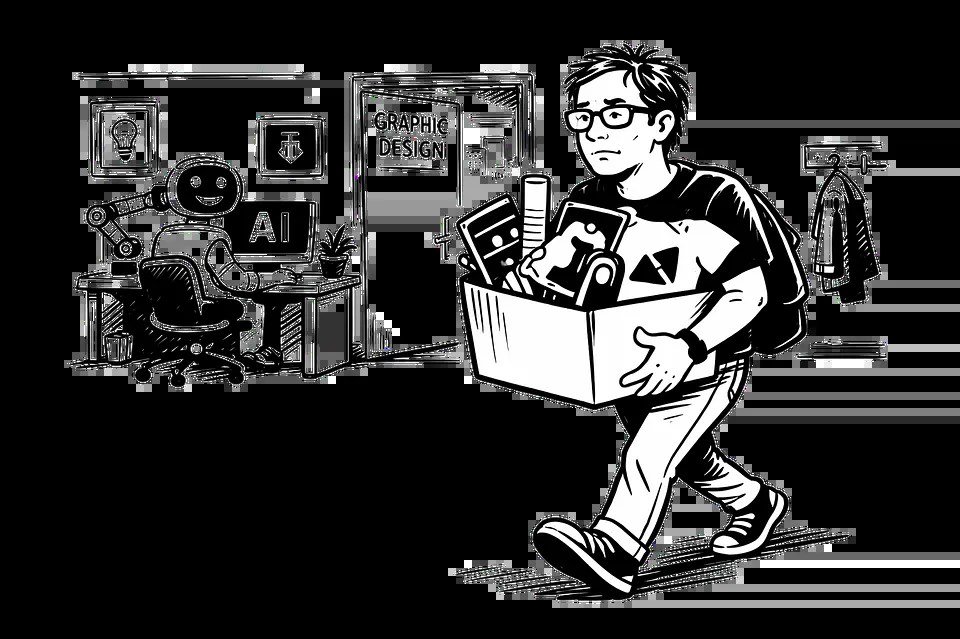
This is the question that launched a thousand anxious freelancer forum threads. Can AI replace freelance writers and designers? I’ll give you the honest answer — not the comforting one, not the terrifying one. The reality is bifurcated: parts of these professions are genuinely shrinking, parts are thriving as never before, and knowing which part you’re in determines everything.
Can AI replace freelance writers and designers? The Honest Answer
Let’s not sugarcoat it. Commodity content is collapsing: basic SEO articles, generic product descriptions, simple social posts, template-based design work — the “words on a page” and “pretty layout” end of the market. Clients who bought the cheapest acceptable content now get acceptable content free from AI. If your entire offering was “I produce [commodity] for [$],” that market is gone or going.
The data: freelance platforms show declining rates and demand for generic writing/design gigs, while premium segments hold or grow. Content mills are dying; that’s not tragedy, it’s creative destruction. Junior/entry-level work is thinning: the simple tasks that trained beginners — basic copy, simple graphics — are the first automated. This creates a real ladder problem (where do beginners start?), but for established freelancers it’s context, not fate.
What’s Thriving (The Other Half)
Strategic creative work is booming: brand strategy, messaging architecture, content strategy, art direction, UX writing — the thinking behind the artifacts. Clients need these more than ever because production got cheap — when everyone can generate, curation and strategy become the scarce skills. Expert-driven content: technical writing, thought leadership, niche expertise content — the “only a human expert could write this” category. Demand is rising as generic content floods the zone and expertise becomes the differentiator.
AI-augmented premium services: freelancers delivering 3x the output at higher quality using AI workflows — “I deliver in days what agencies deliver in weeks.” Speed + quality + strategy is a formidable package. Original creative work: distinctive illustration styles, original photography direction, brand identities with genuine concepts — taste and originality remain human monopolies. AI generates; it doesn’t originate in the meaningful sense.
The Bifurcation: Which Side Are You On?
Test yourself honestly: Could a competent person with ChatGPT/Midjourney produce what you sell, given a week to learn prompting? If yes — you’re in the shrinking zone, and the move is up the value chain (strategy, expertise, originality), not sideways. If no — because your work requires taste, expertise, client understanding, or original thinking — you’re in the thriving zone, and AI is your leverage, not your replacement.
The move for everyone: audit your offerings this month. Label each: commodity (automate or abandon), leverage (AI makes you faster — keep and systematize), and moat (only you can do this — invest here). Shift effort from the first to the third over the next year. This is the practical version of which skills are safest and what can’t be automated — and the competitive playbook is competing as a human freelancer.
What the Next 3 Years Likely Hold
2026–2027: Continued bifurcation. Commodity work keeps compressing — AI video and design tools will do to basic creative work what writing tools did to basic copy. The expertise tier keeps expanding as businesses drown in AI-generated mediocrity and pay premiums for the real thing. The “AI slop” backlash matures: audiences develop AI-content fatigue; distinctive human work commands increasing premiums. Being obviously human becomes a brand asset.
2027–2028: New equilibriums. AI agents handle more complex creative workflows — multi-step campaigns, personalized content at scale. Freelancers who direct these agents (creative direction for AI fleets) emerge as a premium category. Pure production roles continue shrinking; direction and judgment roles grow. What won’t change: the fundamental dynamics — clients pay for outcomes, trust, and expertise; those are human. The form of freelance work keeps evolving, but the value centers (judgment, relationships, originality) are structural.
Your 3-year plan: year 1 — build AI leverage into everything, move up one value tier. Year 2 — deepen expertise moat, develop agent-direction skills. Year 3 — you’re the expert directing AI systems, not competing with them. The freelancers who’ll struggle: those who spent 2026–2028 hoping things go back to normal. They won’t. The freelancers who’ll thrive: those who read this shift correctly — not as the end of freelancing, but as its most exciting restructuring. The work isn’t disappearing; it’s upgrading. Upgrade with it.
The Takeaway
AI is replacing commodity freelance writing and design — the cheapest, most generic work. It’s simultaneously expanding the market for strategic, expert, and original creative work. The question isn’t whether AI replaces freelancers; it’s whether you move up the value chain faster than the commodity floor rises. Audit your offerings, invest in your moat, leverage AI for everything else — and you’ll be on the thriving side of the split.
Market data: Upwork’s skills reports track these demand shifts quarterly.




1 Comment