
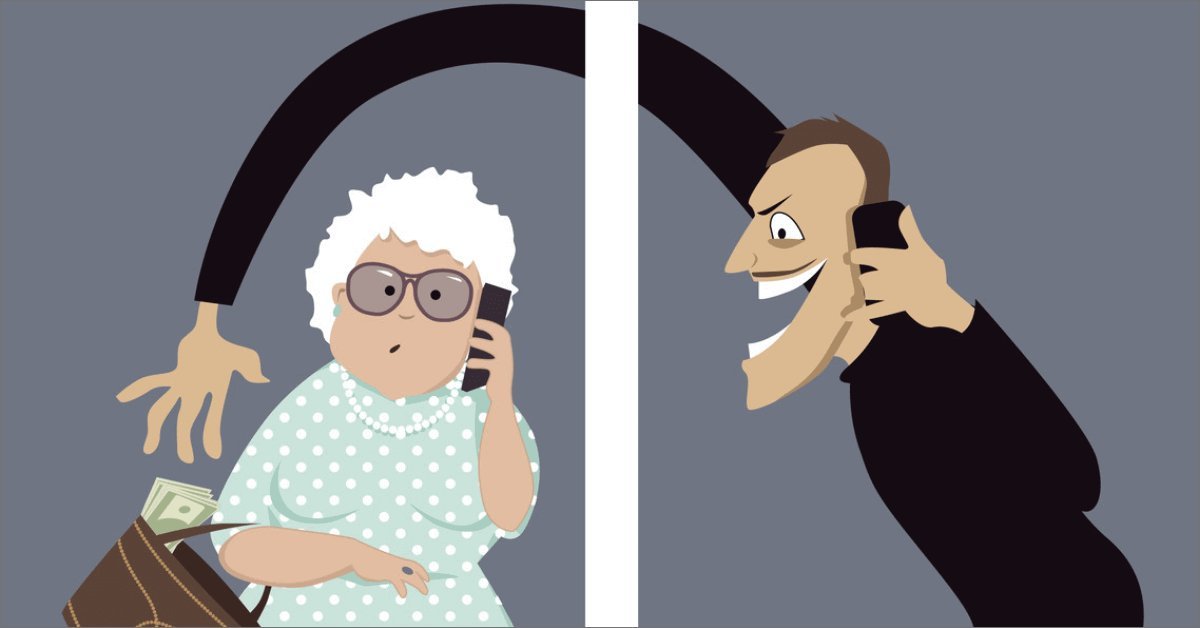
“Grandma, it’s me — I’ve been in an accident, I need money wired right now.” Except it’s not you. It’s an AI clone of your voice, built from seconds of audio. Learning how to protect elderly from AI voice scams isn’t paranoia anymore — the FBI has issued warnings, losses are in the millions, and older adults are the prime targets. Here’s a family action plan.
How to Protect Elderly from AI Voice Scams
Scammers grab voice samples from social media videos, voicemail greetings, or even a brief phone call (“can you hear me?” — that “yes” is enough for some systems). AI clones the voice in minutes. Then comes the call: a panicked “grandchild” or “child” with an urgent crisis — accident, arrest, kidnapping — demanding secrecy (“don’t tell mom, she’ll worry”) and immediate payment via wire, gift cards, or crypto. The panic is the weapon; the cloned voice just opens the door.
Warning signs to teach your family
- Urgency + secrecy. “Act now, tell no one” is the universal scam signature, AI or not.
- Unusual payment methods. Gift cards, crypto, wire transfers — legitimate emergencies don’t demand these.
- The voice is “off.” Cloned voices struggle with emotional nuance; victims often report something felt wrong but panic overrode it.
- Can’t answer personal questions. Scammers dodge specifics — ask something only the real person knows.
- Calls from unknown numbers claiming to be family.
The family protection plan
- Create a family safe word. Pick an unusual word or phrase known only to immediate family. Anyone claiming emergency must provide it. This single step defeats most voice-clone scams — the scammer can’t guess it. Practice using it so it feels natural, not silly.
- Establish a verification rule: any urgent money request gets a callback to a known number — no exceptions, no matter how convincing. Hang up, call back. Every time.
- Reduce voice exposure. Set social media videos to friends-only; change voicemail greetings to not include your name spoken clearly (a surprising data source).
- Talk about it openly. The shame of “I should have known” keeps victims silent. Frame it as: these scams fool smart people; the defense is procedure, not intelligence.
- Slow the payment. Remove saved payment methods from easy reach; set up bank alerts for large transfers; consider a trusted-contact arrangement at the bank.
- Report attempts. FTC (reportfraud.ftc.gov), FBI’s IC3, and local police. Reports build the data that drives enforcement.
What to do if it already happened
Don’t blame — act. Contact the bank/payment provider immediately (wire recalls are time-sensitive), file police and FTC reports, place fraud alerts with credit bureaus, and document everything. Then implement the protection plan above so it can’t happen twice.
Teaching tech safety to older adults (that actually sticks)
Information alone doesn’t change behavior — how you teach matters. What works with older adults: stories, not lectures — “here’s what happened to the Johnsons” sticks; “here are 10 scam indicators” doesn’t. Practice, not theory — role-play a scam call together (you play the scammer); the experience of hanging up builds the muscle. One rule, not ten — “hang up and call back” is memorable; a 20-point checklist isn’t. Repetition without condescension — revisit the topic casually every few months, framed as “scams are getting sneakier” not “you’re vulnerable.”
Make safety the default, not a choice: set up call screening on their phone, enable spam filters, simplify their home screen to reduce accidental taps, and put trusted contacts on speed dial. The best protection is environmental — fewer decisions to get wrong. And celebrate catches: when they spot and report a scam attempt, treat it as the win it is. Positive reinforcement builds the habit.
Resources for families
Bookmark the FTC fraud reporting site and the FBI’s IC3 portal — reporting is quick and genuinely helps enforcement. AARP’s Fraud Watch Network has excellent senior-focused materials. And consider a family group chat dedicated to “scam alerts” — when one person spots a new tactic, everyone learns. Collective defense works.
Make the safe word real: implementation guide
The family safe word only works if it’s actually set up — here’s how to do it this weekend. Choose it together: pick something memorable but unguessable — not a pet’s name (too guessable), not a random string (unmemorable). A favorite vacation spot + a number works well. Write it down somewhere safe (not on a sticky note on the fridge — a sealed envelope, a password manager’s notes field). Practice once: role-play the scenario — you call with a fake emergency, they ask for the safe word. It feels silly; it builds the reflex.
Extend the circle: everyone who might get an “emergency” call needs the word — grandparents, parents, siblings, even trusted neighbors. And refresh annually — if the word might have leaked (mentioned in front of others, written down insecurely), change it. A safe word is a living security measure, not a one-time setup. Fifteen minutes this weekend could save your family thousands.
Practical takeaway
- Set a family safe word — the single most effective defense.
- Rule: hang up on urgent money requests, call back on a known number. Always.
- Teach the signs: urgency + secrecy + gift cards = scam.
- Reduce public voice exposure; talk about scams without shame.
- Report every attempt to the FTC and FBI IC3.
Keep exploring
If you found this useful, these related guides go deeper:



