
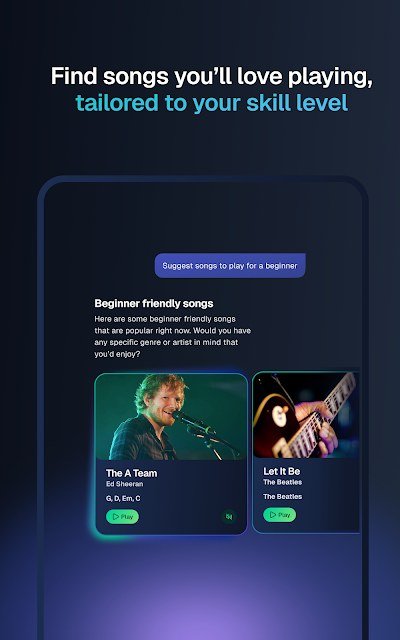
Learning guitar used to mean one of three things: an expensive teacher, a dusty method book, or YouTube rabbit holes at 1 AM. Now there’s a fourth option — and honestly, it’s the most underrated one. Using AI to learn guitar gives you a practice coach that never gets impatient, never charges by the hour, and remembers exactly what you struggled with last Tuesday. This guide covers How to use ai to learn guitar — clearly, honestly, and without the fluff.
Now, let’s be real: AI can’t hear your strings buzz (yet). It can’t fix your wrist angle. But it can do a shocking amount of the other 80% — the structure, the theory, the motivation, the “what do I practice today” problem that kills most beginners.
How to Use AI to Learn Guitar: Start With a Real Practice Plan
The number one reason beginners quit is aimless practice. You noodle for 20 minutes, feel guilty, quit. Tell an AI exactly where you are: “I’ve played for 3 weeks, I know G, C, D, Em, my chord changes are slow, I want to play folk songs. Make me a 4-week plan, 25 minutes a day.” You’ll get something better than most $30 method books — structured, progressive, and tailored to you.
Then use it daily like this:
- Theory on demand. “Explain the CAGED system like I’m 12.” “Why does this chord progression sound sad?” Instant, patient answers.
- Song breakdowns. “Break down the chord progression of Wonderwall and suggest a strumming pattern for a beginner.” It’ll simplify and scaffold.
- Troubleshooting. “My barre chords buzz on the B string — what am I doing wrong?” You’ll get a checklist: thumb position, finger roll, pressure points.
- Motivation engineering. “I’m bored with scales. Give me 5 fun exercises that secretly teach me scales.” This one is weirdly effective.
The weekly review trick
Every Sunday, tell it what you practiced and what felt hard. “This week I did your plan days 1–5, F chord changes still suck.” It’ll adjust next week. This feedback loop — the same one behind AI-built study schedules — is what turns random practice into progress.
What AI Can’t Do (Be Honest With Yourself)
Technique feedback has limits. If your wrist is at a bad angle, text can’t see it. Record yourself, watch it back, and describe what you see to the AI — it can diagnose from your description surprisingly well. And once a month, even one session with a human teacher to check your fundamentals is worth it. Think of AI as your daily coach and the human as your quarterly physical.
Building a 90-Day Beginner Roadmap With AI
Here’s a concrete way to structure your first three months. Days 1–30: the survival phase. Your only goals are clean chord changes between G, C, D, and Em, and strumming in time. Ask the AI for daily 20-minute routines, and be honest when your fingertips hurt — it can suggest shorter, more frequent sessions that build calluses without misery. Most people quit here because they try to learn too much; don’t.
Days 31–60: the song phase. Pick three songs you love that use chords you know. Have the AI simplify the strumming patterns and transpose anything with scary chords. Playing real songs — even simplified — is what makes practice feel like music instead of homework. This is also the time to learn the absolute basics of rhythm: a metronome app plus AI-generated rhythm exercises will fix timing issues before they become habits.
Days 61–90: the musician phase. Start learning the pentatonic scale (ask the AI for the “box 1” pattern and five licks that use it), learn to read tab fluently, and try playing along with recordings. By day 90 you won’t be great — but you’ll be a guitarist, someone who plays regularly and improves weekly. That’s the real milestone, and it’s further than most January guitar-buyers ever get.
Essential Gear on a Beginner Budget
You don’t need much, but the right basics remove friction. A tuner (free phone app is fine — playing out of tune trains your ear wrong). A capo (under $15, opens up hundreds of songs in easy keys). A metronome app (free; timing is the skill beginners neglect most). And comfortable picks — buy a variety pack and see what feels right; it matters more than you’d think.
On the guitar itself: if you’re buying your first, budget $150–$300 for something playable — cheaper instruments often have high action (strings far from the fretboard) that makes learning physically painful. Ask the AI to help you evaluate specific models: “compare the Yamaha FG800 vs. Fender CD-60S for a beginner” will get you a genuinely useful breakdown. And get a setup if you can — a $50 professional setup on a cheap guitar often makes it play better than an expensive one that’s never been adjusted.
The Takeaway
Use AI for structure, theory, song breakdowns, and motivation; use a mirror (or an occasional human) for technique. The guitar doesn’t care how you learned the chords — it only cares that your fingers show up every day. Pair this with solid general study habits and you’ll progress faster than 90% of people who bought a guitar in January.
Good companions: JustinGuitar’s free structured courses plus an AI coach for questions between lessons.



