
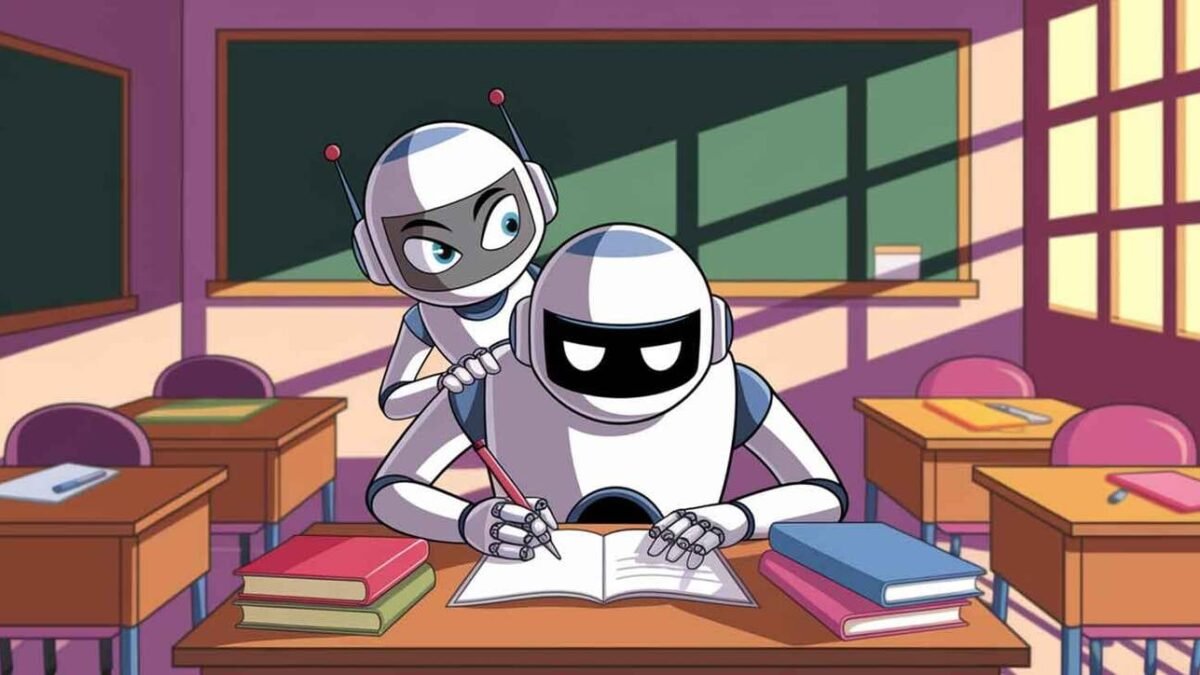
Ask five people is it cheating to use AI for homework and you’ll get six answers. Teachers, students, parents, and administrators are all operating with different definitions — and that’s the actual problem. The question isn’t really about AI; it’s about what homework is for. Once you answer that, the cheating question mostly answers itself.
Is it cheating to use ai for homework? The Honest Answer
Homework exists to build understanding through practice. That’s it. So the cheating test is simple: did you do the thinking the assignment was designed to make you do? If the assignment’s purpose was practicing essay structure and the AI wrote the essay, you cheated yourself — regardless of what the policy says. If the purpose was learning historical analysis and you used AI to brainstorm sources, then wrote the analysis yourself, you used a tool. Same technology, opposite verdicts — because the thinking happened in different places.
The Spectrum (Be Honest About Where You Are)
- Clearly fine: AI explains a concept you’re stuck on. AI quizzes you. AI helps you outline your ideas. AI checks your grammar.
- Gray zone: AI drafts a paragraph you heavily rewrite. AI solves a problem you then study until you understand it. (Gray doesn’t mean safe — know your policy.)
- Clearly cheating: AI does the assignment, you submit it. You can’t explain what you submitted. The work represents the AI’s understanding, not yours.
The uncomfortable truth: most students in the gray zone know exactly which side they’re leaning toward. If you’d be embarrassed explaining your process to your teacher, that’s data. The ethics run deeper than policy — the ethics of AI for schoolwork explores why this matters beyond getting caught.
Why “Everyone Does It” Doesn’t Settle Anything
The practical argument students make: if everyone’s using AI, abstaining just puts you at a disadvantage. There’s something to this — and it’s why responsible AI use matters more than prohibition. But the disadvantage framing misses the point: the student who uses AI to learn faster beats both the abstainer and the copy-paster. Exams, interviews, and real jobs test what’s in your head, not what your chatbot produced. The copy-paste strategy has an expiration date, and it’s sooner than you think.
Protect yourself
Whatever you do, keep your drafts, outlines, and chat logs. If you’re ever wrongly accused of AI use, process evidence is your defense. And when in doubt about a specific assignment, ask the teacher directly — “is it okay if I use AI to brainstorm, but write it myself?” Most teachers respect the question, and their answer is the only policy that matters for that class.
How Teachers Can Tell (And What They Actually Want)
Here’s what students often miss: experienced teachers aren’t really detecting AI — they’re detecting absence of learning. The essay with sophisticated vocabulary but shallow analysis. The problem set with perfect answers the student can’t explain. The sudden style shift from previous work. These signals predate AI; they used to indicate “copied from the internet” or “older sibling helped.” The technology changed, the detection didn’t.
And what teachers actually want is simpler than students think: evidence of thinking. Show your work, explain your reasoning, engage with the material in your own voice — and most teachers become allies, not adversaries. Many are actively redesigning assignments for the AI era: in-class writing, oral defenses, process portfolios. The adversarial framing (“catch the cheaters”) is giving way to a design framing (“make cheating pointless by assessing real understanding”). Students who understand this stop gaming the system and start using AI the way the redesigned assignments intend: as a learning accelerator.
Talking to Your Teacher About AI (Scripts That Work)
The students who navigate this best don’t hide — they communicate. Most teachers would rather have the conversation than catch you. Here’s how to start it: before the assignment, ask directly — “For this essay, is it okay if I use AI to brainstorm and outline, then write it myself? I want to make sure I’m within your expectations.” This single question does three things: shows respect, gets you a clear answer, and creates a record of good faith.
If the policy is unclear, propose your own boundary: “Here’s how I plan to use AI on this — for research and feedback on my drafts, not for writing. Does that work for you?” Teachers love this; it shows maturity and makes their job easier. If you already crossed a line, honesty beats concealment — “I used AI more than I should have on this; here’s what I actually did” — especially before you’re caught. The consequences for admitted mistakes are almost always lighter than for discovered ones. And if a classmate is cheating flagrantly, that’s not your problem to police — focus on your own learning. The meta-lesson: in the AI era, the students who thrive aren’t the sneakiest; they’re the most transparent. Transparency builds trust, and trust buys you the benefit of the doubt everywhere.
The Takeaway
It’s cheating when the AI does the thinking the assignment was meant to build in you. It’s tool use when the thinking stays yours. Know your school’s policy, be honest about where you fall on the spectrum, keep your process evidence, and aim for the strategy that actually wins long-term: using AI to learn faster than everyone else.
Worth reading: academic integrity principles on Wikipedia — the concepts predate AI and still apply.




1 Comment