
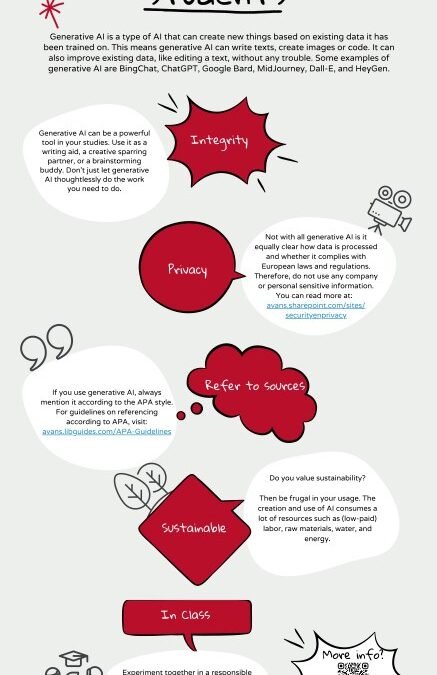
“Use AI responsibly” — every school says it, few explain what it means in practice. How can students use ai responsibly? Not as a slogan, but as concrete habits you can actually follow on a Tuesday night with an essay due Wednesday. Here’s the complete guide, written for students, with zero lecturing and maximum practicality.
How can students use ai responsibly: The Full Breakdown
Everything follows from one distinction: is the AI helping you think, or thinking for you?
Responsible (AI helps you think): explaining concepts you’re stuck on, quizzing you before exams, giving feedback on your drafts, helping you brainstorm and outline, checking your work and explaining mistakes, translating difficult passages, generating practice problems.
Irresponsible (AI thinks for you): writing assignments you submit as your own, solving problem sets you don’t understand, generating content you can’t explain, doing the analytical work the assignment was designed to teach.
The test is always: could you explain and defend the work without the AI? If yes, the AI was a tool. If no, it was a substitute — and substitutes don’t build the skills exams and careers test. This is the practical heart of the cheating question and the ethics question.
Five Habits of Responsible AI Users
- Attempt first. Try the problem, write the paragraph, outline the essay before asking AI. The struggle primes your brain to actually absorb the help.
- Verify everything. AI hallucinates — confidently, fluently, often. Cross-check important facts against your textbook or reliable sources. Never submit an AI-provided fact you haven’t verified.
- Disclose honestly. If your teacher asks how you used AI, tell the truth. Better: volunteer it — “I used AI to brainstorm and check my grammar; the ideas and writing are mine.” Transparency is the habit that keeps everything else honest.
- Know the policy. Every class may differ. “Is AI okay for brainstorming on this assignment?” — ask when unsure. The question itself signals integrity.
- Keep your process. Save drafts, outlines, and notes. If questions ever arise about your work, your process is your proof — and the habit of keeping it makes you a better student anyway.
What Responsible Use Looks Like Day-to-Day
Essay due Friday: you brainstorm with AI Monday, outline yourself Tuesday, draft Wednesday, get AI feedback on the draft Thursday (“where are my arguments weak?”), revise yourself. Math homework: you attempt every problem, use AI only on the ones where you’re stuck — and only for hints first, working through to the solution yourself. Exam prep: AI quizzes you relentlessly (see study methods); you never ask it for “the answers” because the exam won’t have AI either. Research project: AI helps find sources and structure; you read, analyze, and conclude.
Notice the pattern: AI accelerates and supports at every stage, but the thinking milestones belong to you. That’s why students should use AI — not to skip learning, but to learn more per hour than any previous generation could.
Tricky Situations and How to Handle Them
“My teacher said no AI at all, but everyone uses it.” Follow your teacher’s rule for that class. Seriously. The short-term disadvantage is real but small; the integrity habit is permanent and large. And “everyone does it” has never been a defense that worked.
“I used AI for brainstorming — do I need to disclose that?” When in doubt, disclose briefly. “Brainstormed with AI; ideas and writing are mine.” Ten seconds, zero risk, builds the transparency habit. Most teachers appreciate it.
“The AI wrote something great and I want to use it.” The temptation is the test. If the assignment’s purpose was producing that text, using it verbatim fails the authorship test. Instead: study why it’s good, then write your own version incorporating what you learned. You get the learning and the quality.
“I’m so far behind that AI is the only way to catch up.” The most sympathetic case — and the most dangerous, because it feels justified. The honest version: use AI to learn faster (tutoring, quizzing, explanations), not to submit faster. Catching up via submitted-but-unlearned work just moves the crisis to the exam. Talk to your teacher about the backlog; most would rather help you learn than catch you faking.
“My friend wants me to share my AI-generated assignment.” That’s academic misconduct distribution — don’t. Help them learn it instead; you’ll solidify your own understanding in the process.
Tonight’s homework: look at your last week of AI use and sort it honestly — tutor or ghostwriter? No judgment, just data. Then pick one “ghostwriter” habit to convert: instead of having AI write the paragraph, have it critique yours. One converted habit per week. In a month, your AI use will be unrecognizably more effective — and your learning will show it where it counts: on exams, where the AI isn’t there to help.
The Takeaway
Responsible AI use = tutor not ghostwriter, attempt first, verify everything, disclose honestly, know the policy, keep your process. Follow these habits and AI becomes the greatest learning accelerator you’ve ever had — while your integrity, skills, and grades all stay genuinely yours.
Go deeper: academic integrity principles — the timeless ideas behind the modern rules.




2 Comments