
If you work in video, you’ve felt the ground shifting. So let’s be direct about what video jobs are safest from AI disruption — not to scare you, but so you can position yourself where the value is moving.
What Video Jobs are Safest from AI Disruption
Honest first: stock footage creation, basic motion graphics templates, simple explainer animation, and low-end editing (cutting silences, adding captions) are heavily automated already. If your entire job is executing well-defined templates, that work is shrinking fast.
The safest video jobs (and why)
1. Creative direction and concept development
AI generates; humans decide what’s worth generating. The taste, strategy, and client psychology behind a concept remain stubbornly human. Directors who can wield AI as a tool are more valuable, not less.
2. Live production and events
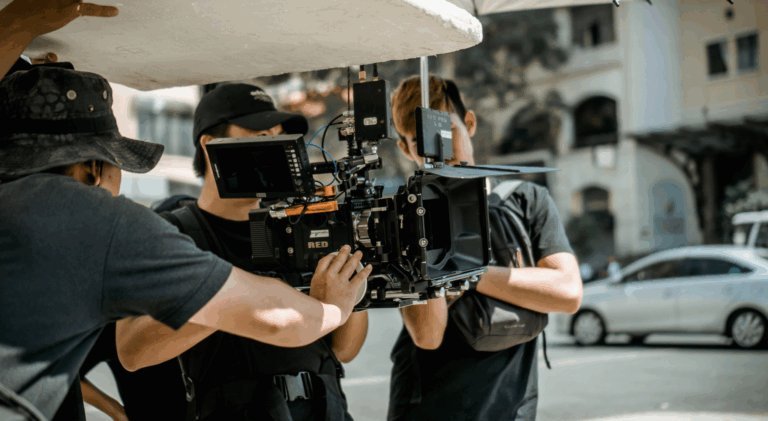
Weddings, conferences, live broadcasts, sports — you can’t AI-generate something happening right now in front of a client. Live production is structurally AI-proof for the foreseeable future.
3. Documentary and journalism
Real footage of real events carries evidentiary and emotional weight that synthetic media can’t replace — and increasingly, audiences actively distrust synthetic “documentary” content.
4. High-end color, sound, and finishing
The last 10% of polish — the color grade that makes a film feel expensive, the sound design that builds tension — requires judgment AI doesn’t have. Craftspeople at the top of these fields are thriving.
5. Client-facing production roles
Producers, production managers, and anyone whose job is managing humans, expectations, and chaos. AI doesn’t attend the 7 AM call when the location falls through.
6. AI video supervision itself
The emerging role: art-directing AI generations, maintaining character consistency, compositing AI elements into real footage. The people who learn this now are writing their own job descriptions.
How to future-proof your video career
- Become the AI power user. The editor who delivers in 2 days using AI beats the purist who takes 2 weeks. Speed is a feature.
- Move up the value chain. From execution toward concept, strategy, and client relationships — the parts AI can’t do.
- Specialize in the physical world. Camera operation, lighting, live events — atoms beat bits for job security.
- Build taste publicly. A portfolio of strong creative decisions is the moat. Tools change; judgment compounds.
The real threat isn’t AI — it’s AI users
I’ve watched this play out: the videographers losing work aren’t losing it to AI, they’re losing it to other videographers who adopted AI and now deliver faster and cheaper. The disruption vector is human competitors with better tools, which means the defense is simple — be the one with the tools.
Building an AI-proof career strategy
Knowing which jobs are safe is useful; having a personal strategy is better. Here’s the framework I’d use: audit your task mix — list everything you do in a month and mark each task as automatable, augmentable, or human-essential. If over 60% is automatable, your role as currently defined is on a timer. Shift toward the human-essential column deliberately — volunteer for the client-facing, judgment-heavy, creative-direction parts of projects. Become the AI expert on your team — the person who knows which tools to use and how is never the first cut; they’re the one training everyone else.
Build a public portfolio of judgment — case studies showing not just what you made but why you made those choices. Tools change; demonstrated taste compounds. And maintain income diversity: a full-time role plus freelance clients, or teaching, or productized services. The workers most hurt by disruption are those with a single income source and a single skill.
Skills worth investing in now
If I were starting a video career today, I’d invest in: AI supervision (art-directing generations, the emerging craft), story and concept development (the scarcest skill as execution gets cheap), and client management (the human interface of production). The YouTube creator economy also remains a viable independent path — individual creators with taste and consistency are building audiences that no AI can replicate, because the audience is there for the person.
Your 90-day future-proofing plan
Don’t overhaul your career overnight — execute this 90-day plan. Days 1–30: audit your task mix (automatable vs. human-essential), pick one AI video tool, and complete three tutorials building real things. Days 31–60: integrate AI into your actual workflow — use it on a real project, measure the time saved, and volunteer for one judgment-heavy responsibility (creative direction, client communication). Days 61–90: build a portfolio piece showcasing AI-assisted work you directed, share it publicly, and have one conversation with your manager about where your role is heading.
The goal isn’t to become an “AI person” — it’s to become the person whose judgment got more valuable as execution got cheaper. Ninety days of deliberate action puts you ahead of 90% of the industry, because most people are still in the “worrying about it” phase. Motion beats meditation.
Practical takeaway
- Safest: creative direction, live production, documentary, high-end finishing, client management, AI supervision.
- Most exposed: templated execution work (basic edits, stock, template motion graphics).
- Move toward concept and judgment; adopt AI tools before competitors do.
- You’re not competing against AI — you’re competing against people using it.
Keep exploring
If you found this useful, these related guides go deeper:



