
Building an AI agent sounds like engineering — but in 2026, it’s closer to writing a really good job description. Here’s how to build your first AI agent without coding, with the emphasis on the thinking that makes agents work rather than the clicking.
How to Build Your First AI Agent Without Coding
Forget “programming.” Building a no-code agent is management: you’re hiring a brilliant, literal-minded, tireless intern. Your job is writing the onboarding doc — what to do, how to do it, what good looks like, when to ask for help. People who manage well build good agents; people who write vague instructions build vague agents. The skill transfers directly.
Step 1: Pick a winnable first project
Score candidates on: frequency (daily/weekly = worth automating), pain (do you dread it?), clarity (can you describe the steps?), safety (worst case if it errs — start where errors are cheap). Great first agents: inbox triage, content repurposing, meeting prep briefings, lead list building, social comment moderation drafts. Terrible first agents: anything moving money, anything customer-facing without review, anything you can’t explain step-by-step.
Step 2: Choose your platform
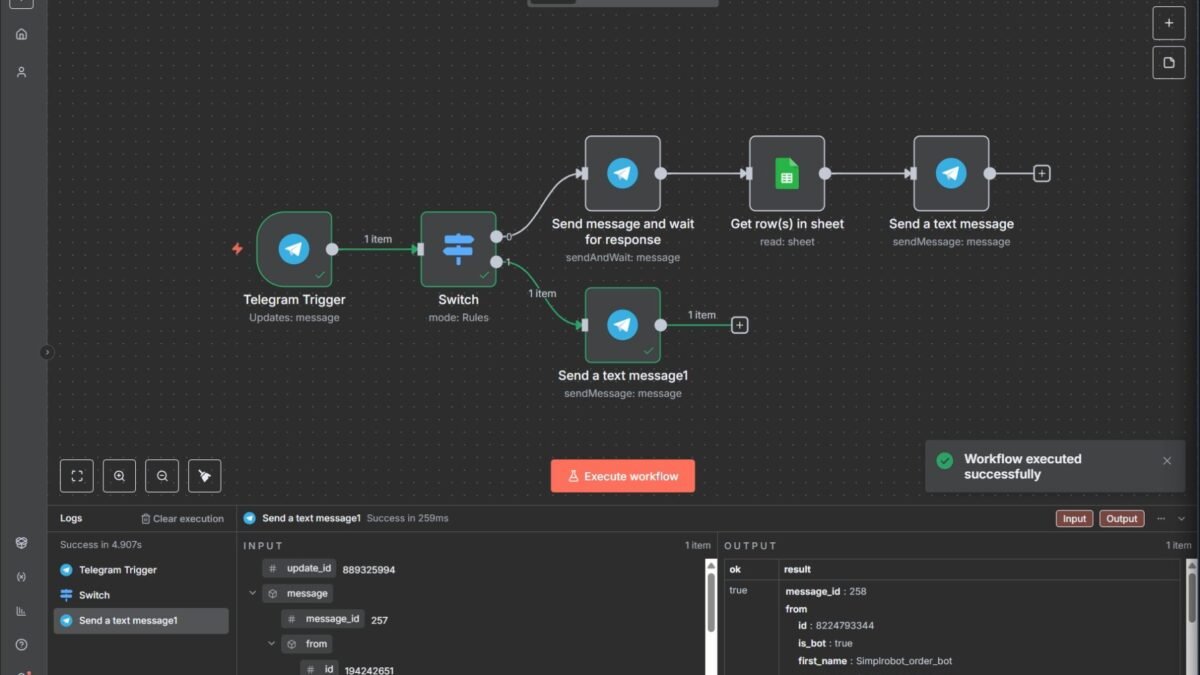
Zapier Agents / Lindy: describe the agent in plain English; fastest path to working. n8n: visual workflows with real agent nodes; more control, moderate learning curve. Dust / Relevance AI: conversational agent builders with good data-source integrations. Pick based on where your data lives — the platform that connects to your tools with least friction wins.
Step 3: Write the agent brief (the real work)
Structure it like this:
- Role: “You are my inbox triage assistant.”
- Goal: “Every morning, categorize new emails and draft replies.”
- Process: numbered steps — read, categorize (urgent/action/fyi/spam), draft replies for action items, never delete anything.
- Examples: 2–3 examples of correct categorization. This is the highest-leverage section.
- Boundaries: “Never send without my approval. Never open attachments. If unsure, flag for review.”
- Output format: exactly how you want results delivered (table? summary? Slack message?).
Step 4: Test like a skeptic
Run 10–15 realistic scenarios including edge cases and adversarial ones (the weird email, the ambiguous request). For each failure, fix the instructions, not the platform. Keep a test log — you’ll see patterns in what confuses the agent, and each fix compounds.
Step 5: Deploy supervised, then loosen
Week 1–2: agent drafts, you approve everything. Week 3–4: agent acts on low-risk items, you review logs. Month 2+: expand autonomy only where reliability is proven. Autonomy is earned, not configured.
From first agent to agent portfolio
One agent is a tool; a portfolio of agents is leverage. The natural expansion path: start with personal productivity (inbox, scheduling, briefings), expand to your team’s shared pains (support triage, reporting, onboarding), then to business processes (lead handling, content pipelines, operations). Each agent teaches patterns you reuse — instructions get better, architectures get cleaner, deployment gets faster. By agent five, you’re building in hours what took weeks the first time.
Manage your portfolio like products: name each agent, document its purpose and owner, monitor health, and retire agents that no longer earn their keep. Agent sprawl is real — five maintained agents beat fifteen forgotten ones. Quarterly reviews: is each agent still used? Still reliable? Still worth its cost? Prune ruthlessly.
Monetizing your agent-building skill
This skill is directly monetizable: freelance automation (businesses pay $1,500–15,000 per agent build), productized agents (build once, sell repeatedly to similar businesses), consulting (help companies identify and prioritize agent opportunities), and content (teaching agent-building builds audience and inbound leads). The freelance marketplaces show strong demand for n8n and AI agent skills — check current rates to calibrate your pricing. You learned a valuable skill building that first agent; now compound it.
Teach someone else: the mastery accelerator
The fastest way to master agent-building: teach it. This month, explain what you learned to one person — a colleague, a friend, a blog post, a short video. Teaching forces you to organize fuzzy understanding into clear explanations; the gaps in your knowledge become obvious the moment you try to articulate them. Document your first agent as a tutorial others can follow — the act of writing it down cements the patterns.
The compound benefit: teaching builds your reputation while deepening your skill — the people who learn agent-building publicly become the visible experts in their circles, attracting opportunities (freelance gigs, jobs, partnerships) that never reach quiet experts. Learn, build, teach, repeat. Each cycle makes you better and more visible. Start the cycle now.
Practical takeaway
- Think manager, not programmer — instructions are the product.
- First project: frequent, painful, clear, safe.
- Write briefs with role, process, examples, boundaries, output format.
- Test adversarially; fix instructions, not platforms.
- Supervised first — autonomy is earned through reliability.
Keep exploring
If you found this useful, these related guides go deeper:



