
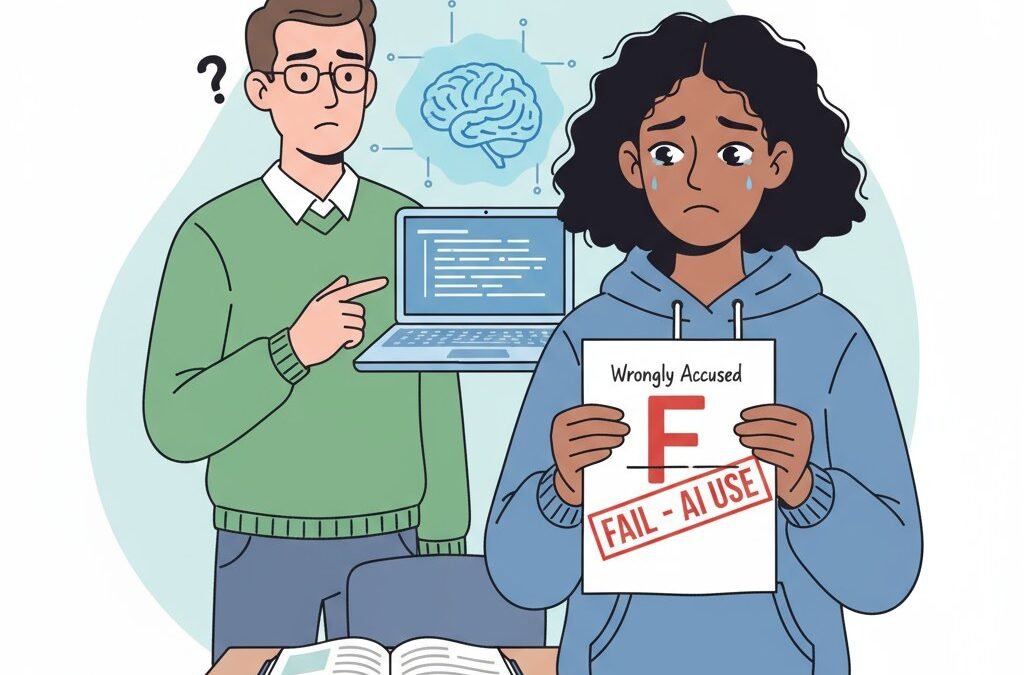
It’s happening to good students everywhere: you submit work you wrote yourself, and back comes an accusation — AI-generated, academic misconduct, see me after class. Your stomach drops. What to do if wrongly accused of using AI at school? Don’t panic, don’t get defensive, and definitely don’t confess to something you didn’t do. Follow this process instead.
What to do if wrongly accused of using AI at school: The Full Breakdown
Your first move is information, not argument. Ask calmly: “Can you tell me specifically what makes you think this is AI-generated?” and “What evidence is the accusation based on?” You’re entitled to know. Often the “evidence” is a detector score — and detectors are notoriously unreliable, with documented false-positive rates, especially flagging non-native English speakers. Knowing the basis of the accusation tells you how to counter it. Write down everything said, with dates.
Step 2: Gather Your Process Evidence
This is your defense, and it’s powerful because AI accusations attack the product while your evidence shows the process:
- Drafts and version history. Google Docs version history is gold — it shows your writing evolving over time, with pauses, deletions, and revisions. AI-pasted work appears all at once.
- Notes, outlines, brainstorming. Anything showing your thinking process.
- Chat logs (if you used AI legitimately as a tutor) showing you asked for explanations, not answers.
- Your knowledge. Be ready to explain your work in person — the explain-it-back test from code authorship checks works for essays too. Someone who wrote it can discuss it fluently.
Step 3: Respond in Writing, Escalate Properly
Put your response in writing — calm, factual, evidence-attached. “Here’s my draft history showing the essay’s development over six days; here’s my outline; I’m happy to discuss the content in person.” If the teacher won’t budge, escalate through proper channels: department head, academic advisor, student ombudsman. Most schools have formal appeal processes for academic misconduct findings — use them. Bring a parent or advisor to meetings if it helps you stay composed.
Know that the detection tools teachers use have known accuracy problems — this is established fact, not your opinion, and citing it (politely) is legitimate. And understand the broader context: the cheating debate has made some educators overcorrect into suspicion-first postures.
Step 4: Protect Yourself Going Forward
After it’s resolved (and it usually resolves — process evidence is convincing), build habits that prevent recurrence: write in Google Docs or Word with version history on, keep outlines and drafts, save brainstorming notes. Not because you’re guilty — because the environment now requires students to prove their process. It’s annoying, but it’s cheap insurance.
Helping Fix the System (Beyond Your Case)
Once your case resolves, consider the bigger picture — because false accusations are a systemic problem, not just your problem. Give feedback through proper channels: student government, course evaluations, the ombuds office. “I was falsely accused based on a detector score; here’s what happened and what it cost me” — concrete stories change policies faster than abstract complaints. Advocate for process-based assessment: the real fix isn’t better detectors (they’ll always be unreliable) but assessment that values process — drafts, revision histories, in-class work.
Support accused peers: if you see it happening to others, share what worked for you. There’s power in students knowing their rights collectively. Push for detector transparency: schools using detection tools should disclose which ones, their known error rates, and the appeal process — students deserve to know the machinery judging them. Your bad experience can become someone else’s protection. The system improves when the people it fails speak up through the channels that change it.
For Teachers: How to Handle Suspicions Fairly
This one’s for the educators reading: false accusations damage the student-teacher trust that’s essential for learning, so handle suspicions with care. Never accuse on a detector score alone. The research is unambiguous — detectors false-positive at rates that make single-score accusations indefensible, with documented bias against non-native English speakers. A detector flag is a reason to look closer, never a verdict. Start with conversation, not accusation: “Walk me through your process on this assignment” — students who did the work can discuss it; this resolves most cases without conflict.
Ask for process evidence — drafts, version history, notes — before concluding anything. Students with documented processes are almost always innocent; the evidence pattern is distinctive. Design assessments that don’t need detection: in-class writing, oral components, process portfolios, personalized prompts that resist generic AI output. The best “AI policy” is assessment design that makes AI misuse pointless rather than policed. And have a clear, fair appeal process that students actually know about — due process isn’t bureaucracy, it’s the foundation of trust. The teachers students remember fondly aren’t the ones who never suspected; they’re the ones who investigated fairly.
The Takeaway
Stay calm, demand specifics, gather process evidence (version history is your best friend), respond in writing, and escalate through formal channels if needed. False accusations are a known failure mode of unreliable detectors — and students with documented processes almost always prevail. Don’t confess to protect the peace; defend the work you did.
Know your rights: the ACLU’s student rights resources cover due process in academic disciplinary proceedings.




1 Comment