
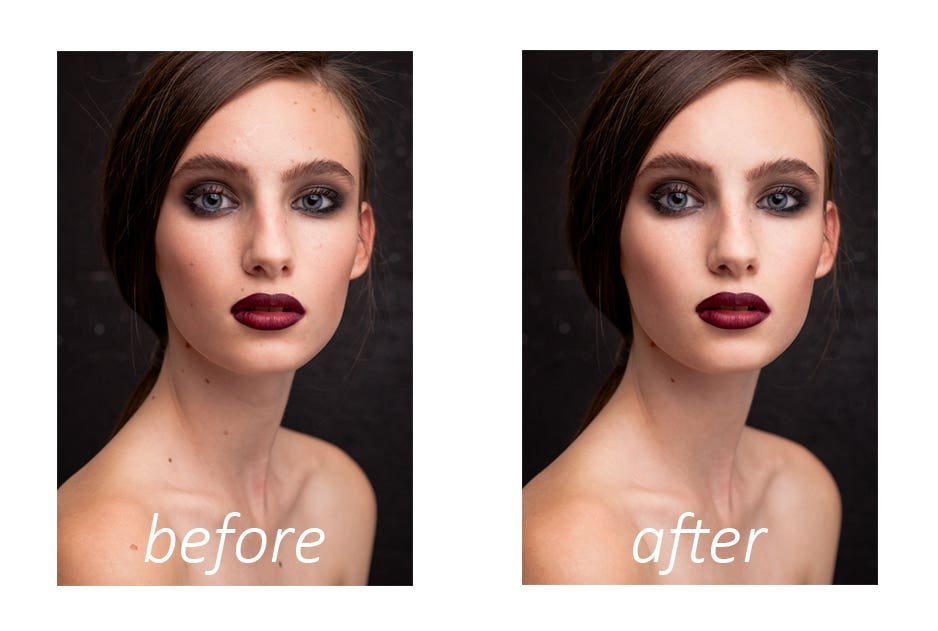
How does AI image editing differ from traditional editing tools? If you’ve spent years in Photoshop, the AI editing revolution feels both familiar and alien: familiar because the goals are the same (better images), alien because the methods invert everything you know. Traditional editing manipulates pixels; AI editing manipulates meaning. Understanding the difference helps you choose the right tool for each task — because despite the hype, neither replaces the other.
The Fundamental Difference: Pixels vs. Semantics
Traditional editing tools operate on pixels: you select regions, adjust curves, clone-stamp, dodge and burn. Every change is explicit, deterministic, and precisely controllable. You know exactly what will happen because you do it, pixel by pixel or through mathematical transformations you direct.
AI editing tools operate on semantic understanding: you describe what you want (“remove the tourist,” “make it sunset,” “change her dress to red”), and the model interprets your intent, understands the image’s content, and generates the change. The AI handles the pixel-level execution; you handle the direction. It’s the difference between painting a wall yourself and telling a skilled painter what you want.
How Does AI Image Editing Differ From Traditional Editing Tools? Task by Task
Object removal
Traditional: clone stamp, healing brush, content-aware fill — manual, skill-dependent, time-consuming for complex backgrounds. You reconstruct the background pixel by pixel.
AI: brush over the object, describe the background (or nothing at all), and the model generates a coherent fill instantly. Dramatically faster, often better for complex textures. Our inpainting guide (inpainting) details the technique.
Winner: AI, by a mile, for most cases. Traditional tools win only when pixel-perfect control matters more than speed.
Background replacement
Traditional: meticulous masking — pen tool paths, refine edge, hair-by-hair selection. Hours of skilled work.
AI: one-click subject selection plus generated backgrounds, or text-prompted scene replacement. Minutes.
Winner: AI for speed; traditional for precision edge work on critical images.
Style and mood changes
Traditional: color grading, LUTs, manual relighting — powerful but bounded by the original pixels. You can’t add what isn’t there.
AI: “golden hour lighting,” “cyberpunk neon,” “Renaissance painting style” — the model regenerates the image’s appearance while preserving composition. Transforms impossible traditionally become prompts.
Winner: AI, transformative. This is the capability gap that changed everything.
Detail enhancement and repair
Traditional: sharpening, noise reduction, manual retouching — enhances existing detail, can’t invent missing detail convincingly.
AI: generative upscaling and detail reconstruction that invents plausible detail (our print upscaling guide: upscaling for print). Powerful, with the caveat that invented detail isn’t real detail.
Winner: AI for enhancement; traditional for honest restoration where authenticity matters.
Precise adjustments
Traditional: exact color values, precise selections, measured transformations, repeatable actions. Total control.
AI: approximate, interpretive, variable between runs. “Make it slightly warmer” might produce three different warmths.
Winner: traditional, decisively. Precision is AI editing’s weakest area.
Compositing
Traditional: layers, masks, blending modes — complete manual control over every element’s placement and interaction.
AI: can generate composited scenes from descriptions or intelligently blend elements, but with less precise control over exact positioning.
Winner: hybrid — AI for generating elements, traditional tools for precise assembly.
The Workflow Revolution: What Actually Changed
- Speed: tasks that took hours take minutes. The economics of editing transformed — more iterations, faster turnarounds, lower costs.
- Skill floor lowered, ceiling raised: beginners achieve results that once required years of Photoshop skill; experts achieve results that were previously impossible at any skill level.
- Iteration culture: when each attempt costs seconds, you explore more directions. Creative work becomes more experimental.
- New failure modes: AI introduces artifacts, hallucinations, and inconsistencies traditional tools never had. New skills: prompt engineering, artifact detection, knowing when to switch to manual.
What Traditional Tools Still Do Better
- Precision: exact colors, exact positions, exact selections. Non-negotiable for brand work, technical illustration, and print production.
- Repeatability: actions, scripts, and presets produce identical results every time. AI varies between runs.
- Subtlety: fine retouching, delicate color work, and nuanced adjustments remain manual crafts.
- Trust: traditional edits are verifiable — every change traceable. AI edits invent content, raising authenticity questions for journalism, evidence, and documentation.
- Learning: manual editing teaches visual judgment; AI editing can bypass the learning that develops taste.
The Professional Workflow: Hybrid Is the Answer
Working professionals don’t choose sides — they sequence: AI for heavy lifting (generation, removal, transformation, exploration), traditional tools for precision (color accuracy, fine retouching, final polish, exact layout). A typical professional edit in 2026: AI removes the background and transforms the mood in minutes; Photoshop handles color precision, edge refinement, and typography in the finishing pass. The tools are complements, not competitors — and the editors thriving are bilingual in both.
For more background, see Adobe Photoshop.
The Takeaway
AI image editing differs from traditional tools fundamentally: semantic direction versus pixel manipulation, speed versus precision, generative versus deterministic. AI wins on transformative changes and speed; traditional tools win on precision, repeatability, and trust. The future isn’t one replacing the other — it’s fluent hybrid workflows where each handles what it does best. Learn both, sequence wisely, and you’ll outproduce purists on either side.



