
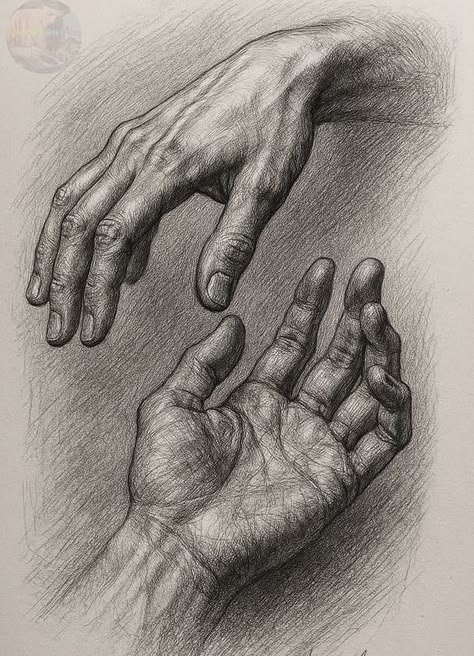
Why do AI images mess up hands and fingers? It’s the most famous flaw in AI art — the six-fingered pianist, the melted mitt where a hand should be, the fingers bending in directions fingers don’t bend. Even as image generators have become stunningly good at faces, landscapes, and everything else, hands remain the final boss. The reasons are genuinely interesting, spanning how diffusion models learn, what hands actually are, and the limits of statistical image generation.
The Short Answer
AI image generators don’t understand hands as 3D objects with bones and joints. They generate images by predicting pixel patterns learned from training data — and hands are exceptionally hard to learn as pure 2D patterns because they’re complex, highly variable, frequently occluded, and underrepresented in clear, labeled detail in training data. The model produces something hand-ish that falls apart on close inspection.
Why Do AI Images Mess Up Hands and Fingers? The Deep Reasons
1. Hands are insanely complex 3D structures
Consider what a hand is: 27 bones, dozens of joints, capable of thousands of poses, constantly deforming as it moves. From any camera angle, fingers occlude each other in intricate ways. A diffusion model learning from flat images must implicitly reconstruct all of this 3D structure from 2D patterns alone — no skeleton, no joint constraints, no physics. Faces are comparatively simple: roughly symmetrical, limited pose range, always photographed frontally-ish. Hands are the hardest common subject in human anatomy to fake, which is why old masters struggled with them too. There’s a reason art students dread drawing hands.
2. Training data underrepresents clear hand detail
Think about photos of people: hands are often small in frame, motion-blurred, cropped out, holding things (occluded), or in pockets. High-resolution, well-lit, clearly-visible hands in diverse poses are rare in training data relative to faces. The model learns faces from millions of crisp examples; it learns hands from far fewer clear ones. Less data, worse performance — the fundamental equation of machine learning.
3. Diffusion models lack structural understanding
This is the core issue. Diffusion models generate images through iterative denoising guided by learned patterns — they don’t build a 3D hand model and render it. They produce pixel arrangements that statistically resemble hands in their training data. For simple, common poses (relaxed hand at side), the statistics suffice. For complex poses (playing piano, holding tools, gesturing), the statistical approximation breaks down into extra fingers, fused digits, and impossible joints. The model doesn’t “know” a hand has five fingers as a rule — it just knows hand-images usually have finger-like protrusions.
4. Fingers are small, similar, and occluding
At typical generation resolutions, individual fingers are small features — dozens of pixels wide. They’re visually similar to each other (unlike, say, eyes versus nose), and they overlap constantly. Small + similar + overlapping is the worst case for pattern-based generation: the model can’t reliably distinguish where one finger ends and the next begins, so they merge, split, or multiply.
5. No anatomical constraints in the architecture
Nothing in a standard diffusion model enforces “exactly five digits per hand” or “joints bend only one way.” These are the kinds of hard constraints a 3D graphics engine has but a 2D pattern generator lacks. Some newer approaches add structural guidance (pose skeletons, depth maps — via tools like ControlNet), which dramatically improves hands precisely because they inject the structural information the base model lacks.
How Much Has This Improved?
Enormously, and the trajectory matters. Early 2023: nightmare hands in most generations. Late 2023–2024: major models got dramatically better — correct finger counts in common poses became the norm rather than the exception. Current models handle standard hand poses well; they still struggle with complex interactions (hands grasping objects, intertwined fingers, extreme foreshortening). The improvement came from better training data, larger models, and architectural refinements — not from solving the fundamental 3D-understanding problem, which remains unsolved.
What This Tells Us About AI Image Generation
Hands are a window into how these models actually work — and don’t. They reveal that diffusion models are extraordinary pattern-matchers without underlying world models: brilliant at reproducing the appearance of things, with no understanding of the structure beneath. Every AI artifact — garbled text, impossible architecture, melting objects — is the same phenomenon: statistics without comprehension. Hands are just where it’s most visible, because we’re the world’s leading experts at spotting hand wrongness.
This also predicts where future improvements come from: hybrid approaches combining generative models with structural understanding (3D priors, physics constraints, anatomical models). The models that eventually nail hands won’t just be bigger — they’ll be architecturally different.
Practical Takeaways for Creators
- Design around the weakness when it matters: gloves, pockets, holding objects (occluded fingers), cropped framing, shallow depth of field on hands.
- Use structural guidance tools (ControlNet with hand/pose references) for critical generations — they inject exactly the structural info the model lacks.
- Fix in post rather than regenerating endlessly: our guide to fixing deformed AI hands covers inpainting workflows.
- Zoom in before publishing. Hands look fine at thumbnail size and horrifying at full resolution. Always check.
See also: inpainting to fix parts of an AI image.
For more background, see Wikipedia’s Stable Diffusion article.
The Takeaway
AI images mess up hands because diffusion models generate 2D pixel patterns without 3D structural understanding, hands are anatomically complex and underrepresented in training data, and nothing in the architecture enforces anatomical rules. It’s improved dramatically and will keep improving — but hands remain the clearest demonstration that these models mimic appearance without comprehending structure. Design around it, fix it in post, and appreciate what it teaches you about how the technology really works.




1 Comment