
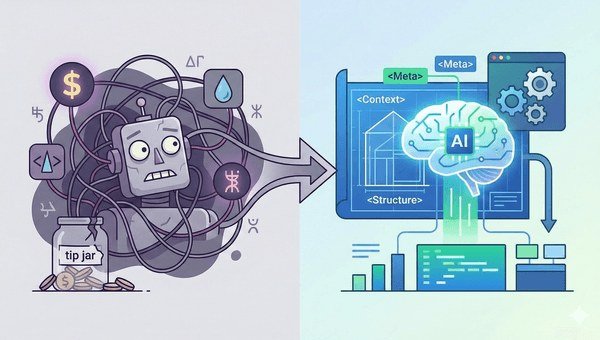
Framework migrations are the projects everyone dreads: months of tedious translation, subtle behavior changes, and the constant fear that something critical broke silently. So can AI help migrate code between frameworks? Yes — substantially. But a framework migration isn’t a language translation; it’s a redesign wearing a translation’s clothes. The teams that succeed use AI for leverage while respecting that difference.
Where AI Genuinely Accelerates Migrations
Start with mapping. Before translating a line, have AI build a migration map: “Here are 50 components in Framework A — for each, identify the Framework B equivalent, and flag anything with no direct equivalent.” This inventory is gold. It tells you the 80% that’s mechanical versus the 20% that needs rethinking, which is exactly the scoping information managers need and developers usually guess at.
Then mechanical translation: components, routes, and state management patterns that map cleanly. AI handles these fast — feed it the old component plus the target framework’s conventions (“use the composition API, TypeScript strict mode”) and review the output. Test porting comes next: translate the test suite first, get it passing against the old code, then use it as the contract for the new. And boilerplate generation — config files, build setup, project scaffolding in the new framework — is pure AI territory.
Can AI Help Migrate Code Between Frameworks on the Hard Parts?
Honestly? Partially. The hard parts of migrations are paradigm differences: Angular’s DI container doesn’t exist in React; Vue’s reactivity model differs from Svelte’s. AI can draft translations, but someone who understands both frameworks must make the design decisions. State management is the classic trap — directly translating a Redux store into Zustand-shaped code produces something that works but misses the point. Performance characteristics differ too: patterns that were fast in the old framework may be slow in the new one.
The rule: AI translates code; humans translate architecture. For every module, decide first “what’s the idiomatic way to do this in Framework B?” and only then let AI draft it. Skipping the design step gives you Framework A wearing a Framework B costume — technically migrated, spiritually still legacy.
The strangler pattern still wins
Don’t big-bang it. Migrate route by route or feature by feature, running both frameworks side by side (the strangler fig pattern). AI makes each slice faster, but the slicing strategy is what de-risks the project. Each migrated slice ships to production, gets validated with real traffic, and builds confidence for the next one. Combined with AI-assisted refactoring discipline — tests first, small slices, verify constantly — migrations become manageable instead of mythical.
Before You Start: Understand What You’re Migrating From
Half of migration pain comes from not fully understanding the old system. Use AI to explain the legacy code first — map the data flows, document the weird parts, capture the tribal knowledge. You can’t faithfully migrate behavior you don’t understand, and “the new version behaves differently and nobody knows why” is the failure mode that kills migrations. The same verification habits from converting code between languages apply: behavior parity proven by tests, not assumed from reading.
Estimating the Migration (So You Don’t Lie to Your Manager)
Migration estimates are where careers go to die, so let’s be honest about the math. Break the codebase into the AI-mapped categories: mechanical (direct equivalents exist — estimate these at 3–5x faster with AI than manual), adaptation (concepts map but idioms differ — 2x faster), and redesign (no equivalent — AI barely helps; estimate normally). A typical migration splits roughly 50/30/20 across these. Do the weighted math and you get a credible estimate instead of a hopeful one.
Then add the migration tax everyone forgets: updating CI/CD, retraining the team on the new framework, rewriting internal docs, and the long tail of “weird behavior only in production” bugs. Budget 20–30% on top for this. Present the estimate as a range with the assumptions listed — “6–9 weeks assuming the auth module is adaptation not redesign” — and update it after the first migrated slice, when you have real velocity data. The first slice is your calibration; never commit to the full timeline before completing it.
After the Migration: The Work Nobody Plans For
The migration ships. Everyone celebrates. Then the real work begins — the post-migration tail that nobody put in the project plan. Performance tuning: the new framework has different performance characteristics, and the patterns that were fast before may be slow now. Budget two to four weeks of profiling and optimization; AI can help analyze flame graphs and suggest fixes, but someone has to do the measuring. Bug triage: subtle behavior differences surface over weeks, not days — the date formatting that’s slightly off, the edge case in the old framework’s router that the new one handles differently. Keep the old system runnable (read-only if possible) so you can diff behaviors when bugs are reported.
Team retraining is the underestimated line item. Your developers knew the old framework’s quirks intimately; now they’re beginners again, and beginners write bugs. Pair this with AI assistance deliberately — the same tools that helped migrate can now tutor the team on idioms (“show me the idiomatic way to do X in the new framework”). Documentation updates — internal wikis, onboarding guides, architecture diagrams — all reference the old world. Assign ownership explicitly or it never happens. And finally, the retrospective: what did the AI actually accelerate versus what needed human judgment? Write it down. Your next migration — and there will be one — starts with that document, not from scratch.
The Takeaway
AI is a genuine force-multiplier for framework migrations: mapping, mechanical translation, test porting, and scaffolding all go 3–5x faster. But keep humans on architecture decisions, migrate slice by slice with the strangler pattern, and prove behavior parity with tests. Do that, and the dreaded migration becomes just another project — a big one, but a tractable one.
Pattern reference: the strangler fig pattern on Wikipedia explains the incremental approach that makes migrations safe.



