
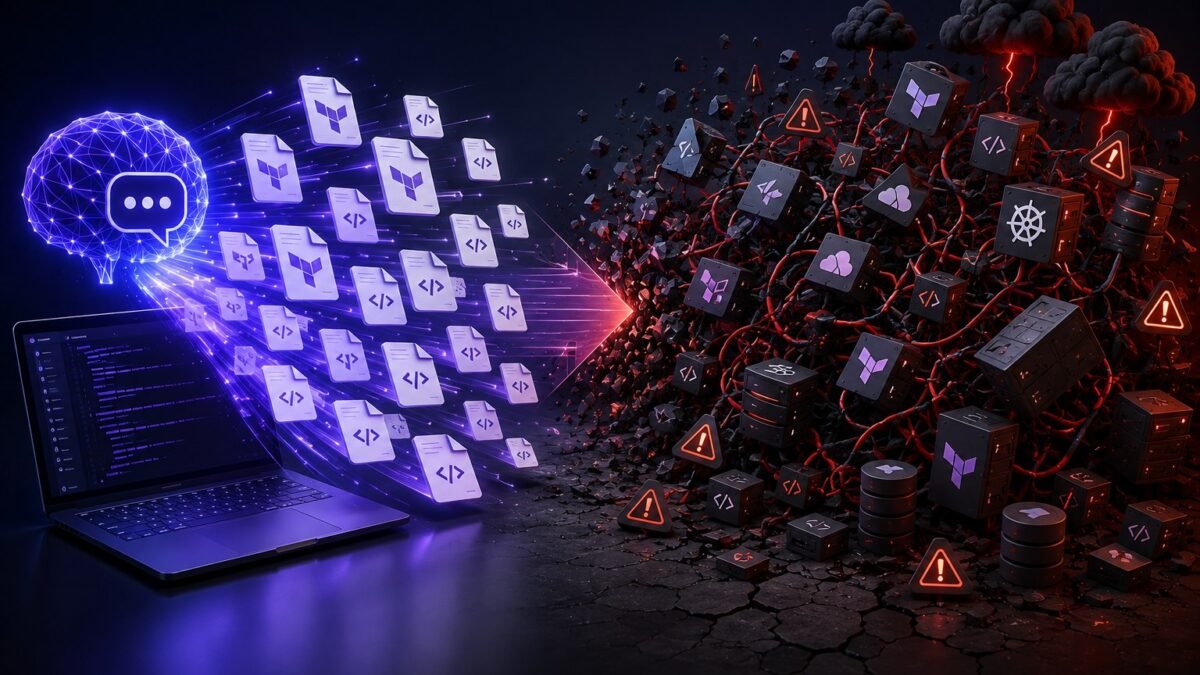
DevOps work is famously toil-heavy: YAML files, Terraform modules, CI pipeline debugging at 2 AM, and Dockerfiles that work on your machine and nowhere else. So is AI useful for DevOps and infrastructure code? More than for almost any other kind of code — because infrastructure work is pattern-heavy, documentation-rich, and extremely verifiable. But “infrastructure as code” also means “infrastructure as blast radius,” so the verification bar is higher.
Is AI useful for DevOps and infrastructure code? The Honest Answer
- Writing Terraform/CloudFormation from descriptions. “I need a VPC with public and private subnets across 2 AZs, an RDS Postgres instance, and an ALB” — AI generates working modules in seconds. This is genuinely transformative for teams without a dedicated infra person.
- Dockerfile and CI pipeline authoring. Describe the stack, get a multi-stage Dockerfile and a GitHub Actions workflow. The patterns are so standardized that AI rarely gets them wrong.
- Debugging failed builds. Paste the error log: “why did this pipeline fail?” AI reads logs well and spots the misconfigured env var or the expired token fast.
- Explaining inherited infrastructure. “What does this 800-line Terraform config actually provision?” — instant documentation for the infra you inherited.
- Kubernetes manifests. Deployments, services, ingress, HPAs from plain-English descriptions. Just verify the resource limits it invents.
The Verification Bar Is Higher Here
Here’s the thing about infrastructure code: a bug doesn’t throw an exception — it opens a port, deletes data, or bills you $40,000. So is AI useful for DevOps given the stakes? Yes, with ironclad habits:
- Always plan before apply.
terraform planis non-negotiable. Read the plan. AI-generated infra code gets the same scrutiny as a junior’s first PR to prod. - Lint and scan everything. tflint, Checkov, tfsec — run them on AI-generated infra code. They catch the open security groups and unencrypted buckets that AI sometimes includes.
- Test in a sandbox account first. Never let AI-generated infrastructure touch production on the first run. Ever.
- Watch for invented resource attributes. Cloud provider APIs change; AI memory doesn’t. Verify resource arguments against current provider docs.
This is the production-trust question at its most serious — the same framework as trusting AI code in production, with higher stakes. And since infra code is full of credentials, read keeping secrets out of AI workflows before pasting anything.
Building Your Private AI Infra Assistant
Many DevOps teams now run a local LLM as an API endpoint specifically for infrastructure work — the privacy benefit is obvious when your prompts contain architecture details. Pair it with your runbooks: “here’s our incident runbook, here’s the alert — what are the likely causes and first three checks?” That’s not replacing the on-call engineer; it’s giving them a head start at 2 AM, which is when head starts matter most.
Common AI DevOps Mistakes to Avoid
The mistakes have a pattern. Applying generated infra without reading the plan is number one — terraform apply on autopilot has destroyed more weekends than any other command. Trusting invented resource arguments: AI confidently writes provider arguments that don’t exist, and the error messages are cryptic enough that you waste an hour before checking the docs. Over-permissive security groups: AI-generated examples often use 0.0.0.0/0 for simplicity; in production, that’s a finding in your next audit.
Secrets in generated code — AI sometimes includes placeholder credentials that look fake but follow real formats; scanners flag them and someone has to investigate. No state management strategy: the generated Terraform works, but nobody set up remote state, locking, or state separation per environment — the unglamorous scaffolding that prevents disasters. Skipping the sandbox because “it’s just a small change.” Small changes to infrastructure are how big outages start. The checklist is short: read the plan, verify arguments, lock down networking, manage state, sandbox first. Every time.
AI for Incident Response: The 2 AM Use Case
The most underrated DevOps AI use case isn’t writing infrastructure — it’s debugging it at 2 AM when your brain doesn’t work. Paste the alert, the recent deploys, and the relevant logs: “Here’s the PagerDuty alert, here’s what changed in the last 24 hours, here are the error logs — what are the three most likely causes, ordered by probability, and what’s the first thing I should check for each?” This isn’t replacing the on-call engineer; it’s giving a tired human a structured starting point instead of a blank panic.
Build this into your runbooks explicitly. For each common alert type, pre-write the AI prompt template with placeholders for the incident-specific details. The on-call engineer fills in the blanks and gets a head start. Some teams go further: automated triage where the alert pipeline itself calls an AI model to attach a preliminary analysis to every page — likely cause, relevant dashboards, similar past incidents. The human still decides, but they start from analysis instead of from zero. Post-incident reviews benefit too: feed the timeline to AI and ask it to draft the incident report structure, identify contributing factors, and suggest action items. You review and correct, but the blank-page problem disappears. At 2 AM, and in the blameless retro afterward, that head start is worth more than any infrastructure-generation feature.
The Takeaway
AI is genuinely excellent at DevOps toil — infra code generation, pipeline authoring, log debugging — because the work is pattern-rich and verifiable. Just hold it to infrastructure-grade verification: plan before apply, scan everything, sandbox first. The blast radius demands respect; the productivity gain earns it.
Scanning tools to know: Checkov and tfsec for static analysis of Terraform.



